I still remember the first time I read Acts 5:12-42 slowly, instead of skimming it like I used to. It felt less like an old record from the early Christian church and more like a living story, full of real people making hard choices. The apostles in this passage were not superheroes with perfect confidence; they were ordinary men who had to lean on faith and unshakeable faith just to get through the day. What struck me most was how miracles happened right alongside plain, everyday obedience. The text reads like one of those captivating narratives that pulls you in, not because of dramatic special effects, but because of the quiet commitment these men showed to Christ. Even the persecution they faced, sparked by nothing more than jealousy from religious leaders, could not shake what they believed. Reading it again as an adult, I noticed the divine wisdom behind their calm responses, and I found myself wondering how many of us would respond the same way under that kind of pressure.
What makes this chapter so rich is how many threads run through it at once. You have bold witnesses standing firm, a clear gospel message being shared without fear, and a group of witnesses for Christ who refused to stay silent even when threatened. Their evangelism was not polished or rehearsed; it was raw and honest, which is part of why the narrative still feels so alive today. There is a vivid tapestry of stories woven into these verses, each one adding to the bigger picture of what spreading the gospel really cost the early believers. The essence of the passage, at least to me, lies in its transformative power, the way it turned frightened followers into people willing to face any challenges ahead of them. I see it as a kind of guiding light for anyone going through their own season of doubt, showing that resilience and wisdom can carry you through, and that the process of converting hearts often starts with simply refusing to back down. The lessons tucked into this chapter are practical, not just theoretical, and that is exactly why I keep coming back to it.
I still remember sitting with Acts 5:12-42 for the first time, trying to get a vivid picture of what life must have felt like in the early church. Through the apostles’ hands, miracles broke out one after another astonishing feats of healing that felt almost too cool to be real. Word spread fast, and people came from everywhere just to see, some hoping even a shadow falling on them might trigger a healing. This wasn’t slow, quiet growth it was rapid, resulting in a wave of attention that pulled in individuals from every corner of the city, turning ordinary folks toward Jesus in ways nobody could have planned.What strikes me most, though, isn’t just the miracles themselves but what they stirred up. Genuine faith was spreading, and that kind of undeniable movement doesn’t go unnoticed especially by people in power. The religious authorities of the time watched this growth with rising unease, and you could feel the tension building between fear and jealousy. I’ve felt something similar in my own life: when you stand firm in what you believe, opposition often follows, not because you did something wrong, but because real faith always makes waves.
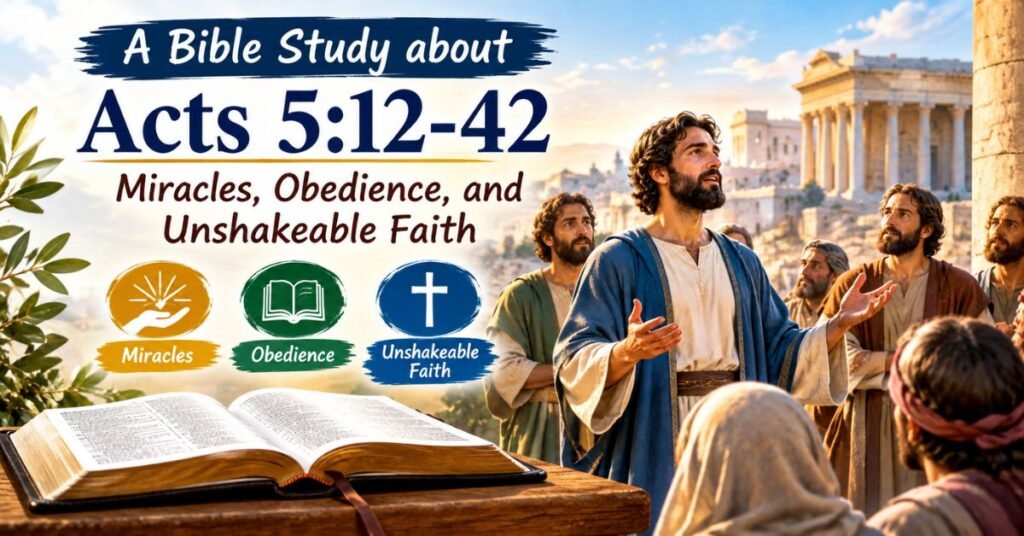
There’s something deeply moving about picturing the apostles standing under Solomon’s Portico, doing ordinary things in an extraordinary way. Through them, divine power flowed out in signs and wonders that no one could explain away, and honestly, the more I study this passage, the more I realize how real faith looked back then visible, active, undeniable. The people of Jerusalem held these believers in high esteem, not out of blind admiration but because what they witnessed matched what they’d heard about the Lord. It wasn’t a quiet following either; multitudes of men and women were drawn in, and I think that’s the part we often miss this wasn’t a small movement, it was a citywide awakening.What gets me every time I read this section is the desperation and hope mixed together in the streets. Families brought their sick out on cots and mats, hoping that even Peter’s shadow might fall on them as he walked by that’s how much they believed healing was possible. People from surrounding towns near Jerusalem gathered, bringing those afflicted, including some troubled by unclean spirits, and Scripture tells us plainly that all of them were healed. I find that detail almost overwhelming not one person turned away, everyone healed. It reminds me that genuine miracles aren’t just about the spectacle; they’re proof of something bigger working through ordinary hands, and that’s a truth I’ve carried with me long after closing the page.

Whenever I sit with this question, I can’t help but think these miraculous interventions were never arbitrary every single one carried weight, pointing straight back to God’s presence working through the apostolic mission. These weren’t random acts meant to impress a crowd; they were deliberate demonstrations, each one reinforcing the authenticity of the message the apostles carried. I’ve come to believe that’s the whole point the credibility of what they preached needed something undeniable behind it, and that’s exactly what these extraordinary acts provided. The profound significance of it all wasn’t just in the astonishment it caused, but in what it confirmed: that this faith was real, backed by something far greater than human effort.What I find most personal about this is how it didn’t stop at spectacle. Every person who became a witness carried away a lasting impression, and that’s how you get multitudes choosing to embrace this new way of life. I think about individuals in my own life who only believed something was real once they saw its transformative power firsthand that’s human nature, and God seemed to understand that. These signs served as an endorsement, a stamp of legitimacy, meant to build the community of believers not through pressure but through visible proof of God at work. Looking back, I don’t think the apostles performed miracles to be admired I think they did it so people could finally see what they’d been telling them all along.
I’ve often wondered why extraordinary acts carry so much weight when it comes to faith and belief in Christ, and the more I reflect on it, the more I realize it’s because of how personal they become. These awe-inspiring events rarely stay distant from the witnesses who experience them there’s an initial wave of amazement, sure, but it doesn’t end there. It leaves a lasting impression that quietly reshapes people’s faith journeys. I think about the personal connections woven into stories like these, where miracles aren’t abstract; they involve real individuals, real family members and friends who were miraculously healed or cured of incurable diseases. When it’s someone you love, you become emotionally engaged participants rather than distant observers, and miraculous healings ripple outward into entire families and communities, making divine power feel close and real.What strikes me on a more personal level is how this curiosity and awe don’t just fade after the moment passes. Seeing God’s power and mercy up close leaves a profound impact, often shattering preconceived notions and deepening understanding in ways that spark genuine wonder about the mysteries of God. In my own walk, moments like these acted as a catalyst, pushing me toward deeper spiritual exploration rather than letting me settle into a spiritual journey built only on astonishment. It pulls you past surface-level belief, urging you to sit with the teachings and message more seriously, examining the spiritual aspects of what you claim to believe. That’s when faith deepened and became truly meaningful not because of the spectacle itself, but because of the transformative effect it sparked, inviting each of us to embark on a real connection with Christ that outlasts the initial wonder.

Reading this section always gives me chills, because it shows just how quickly things can turn when God is clearly at work. The apostles had become genuinely impressive figures in Jerusalem, performing signs and miracles through God’s power, and their growing success only fueled jealousy among the religious leaders. The high priest and the Sadducees, threatened by the authority behind their message, had the apostles arrested and thrown into public prison. I’ve always found it striking that this wasn’t really about doctrine for the religious authorities it was about control, about watching influence slip out of their hands. But that night, an angel of the Lord opened the prison doors and led them out to freedom, sending them straight back to the temple to keep speaking to the people, delivering the words of Life at daybreak as if nothing had happened. That’s the kind of boldness I try to hold onto in my own life obedience that doesn’t pause even when the risk is real.What happens next is almost comedic if it weren’t so serious. The council, or senate of the people of Israel, sent officers to fetch the apostles from prison, only to find the guards standing firm at locked doors, with the captain of the temple and chief priests utterly perplexed, wondering how the men had vanished. I think about how disorienting it must have been for them proof was standing right in front of them, yet stoned in confusion rather than faith, some in the crowd were even ready to have the apostles stoned for what they preached. This religious conflict within the early church wasn’t just political tension; it was the beginning of real suffering for the sake of Christ. And what moves me most is the apostles’ willingness to endure it all for the sake of Christ, trusting that this same miraculous hand that had set free them once would carry them through whatever came next.
Every time I read how the religious leaders responded to the apostles, I can’t help but see something painfully human in it. Their reaction wasn’t really about theology it was envy, plain and simple. Watching the apostles’ ministry grow so quickly, drawing crowds and changing lives, stirred up a fear that their own authority was slipping away. I think that’s often how it goes when someone feels their position threatened the desire to maintain control outweighs the truth staring them in the face. The apostles’ success wasn’t a small thing either; people were listening, believing, and turning toward a message that didn’t come from the established religious system, and that alone was enough to make the leaders feel deeply threatened.From my own experience watching how institutions react to change, I’ve noticed this same pattern repeat itself when something disrupts an established religious hierarchy, those in power rarely respond with curiosity; they respond with control. The leaders were determined to put an end to what they saw as a growing problem, not because the apostles were doing anything wrong, but because their influence was becoming impossible to ignore. It’s a sobering reminder that opposition to truth doesn’t always come from disbelief sometimes it comes from people who are simply afraid of losing their place.
I still remember a season in my life when my authority in a leadership role was challenged, and looking back, my first reaction wasn’t pretty. There was this instinctive desire to maintain control, to protect my position rather than sit with the discomfort of being questioned. If I’m honest, that response came from fear and a deeper insecurity I hadn’t fully faced yet the same kind of pattern we see play out in the narrative of Acts, where those holding power reacted defensively the moment their influence felt threatened. It’s humbling to admit that authority without humility can quickly turn into something closer to oppression, and opposition, when handled poorly, tends to spark unnecessary aggression rather than honest dialogue.What I’ve learned since then is that not every challenge to authority calls for a defensive stand. Some situations genuinely require an essential, firm response but most of the time, a constructive response serves everyone better than digging in out of pride. I think about the Pharisee-like tendencies we all carry, much like the associations drawn in the book of Acts, where clinging to power created conflicts that led to real negative consequences for everyone involved. These days, when my authority is questioned, I try to pause and ask whether I’m protecting truth or just protecting myself because those two things are rarely the same.

I try to imagine the dark, oppressive feeling of sitting in a prison cell, confined for nothing more than proclaiming the teachings of Jesus, facing threats and persecution from the religious authorities who wanted them silenced. Then suddenly, an angel appears — something radiant, almost ethereal and the prison doors simply open. I can only picture the astonishment and disbelief that must have washed over them, that half-second where you wonder if you’re caught in a vivid dream or some kind of hallucination brought on by sheer stress. But this wasn’t imagination; it was an extraordinary intervention, a miraculous release that marked real transformation in the apostles, described plainly in Acts 5:17-26. What strikes me most is the renewed sense of purpose that followed something so astonishing — this miraculous liberation wasn’t just freedom from a cell, it was confirmation of a sense of purpose that no threat could touch, even after being silenced and imprisoned.What this reveals about their unwavering commitment to spreading the gospel is honestly humbling to sit with. Right after this extraordinary event, they went straight back to their mission, treating the angelic intervention as a powerful affirmation that their work was divinely ordained. There’s an immediate compliance in how they followed the angel’s guidance, no hesitation despite everything they’d just endured. In my own walks through hardship, I’ve noticed how threats and persecution either break people or refine them and here, the imprisonment they endured only deterred them further from fear, deepening their dedication to evangelism. Their determination to carry the message of Christ through adversity speaks to a kind of supernatural experience producing real fearlessness, a divine intervention that turned freedom into fuel. It left them emboldened for future challenges and continued opposition, holding courage and conviction through a whole spectrum of feelings from astonishment and disbelief to renewed purpose and enduring fearlessness. That kind of confirmation of faith in a divine mission is what I find most motivating in this passage, a quiet reminder to persevere through adversity for the sake of the gospel message.
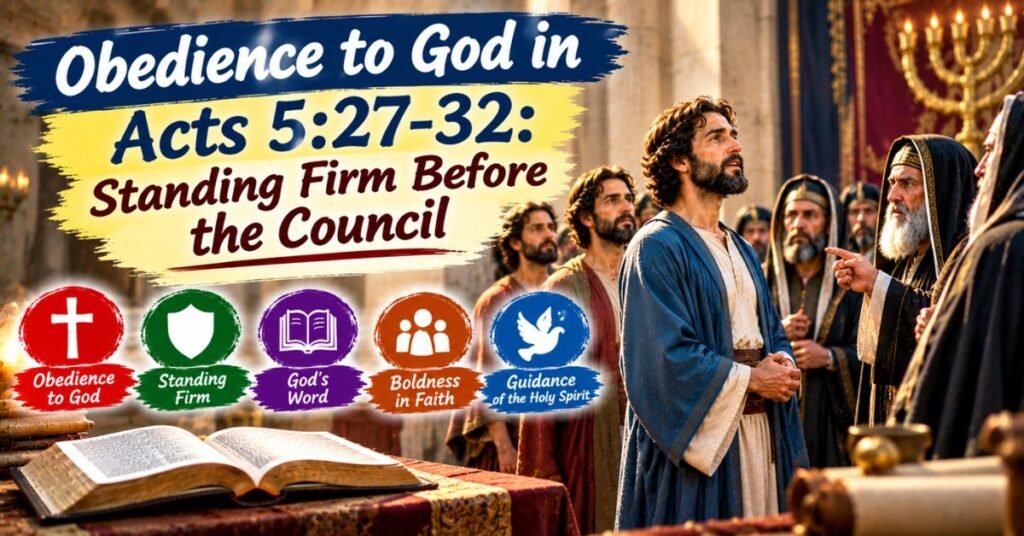
Not long after they’d escaped jail, the apostles found themselves face-to-face with the very religious leaders who’d locked them up in the first place. Brought before the council, the high priest questioned their actions, visibly frustrated that they were still teaching despite being charged not to teach in that name, and yet here they were, filling Jerusalem with their teaching anyway. There’s a line accusing them of trying to bring this man’s blood upon the council, and I love how Peter doesn’t flinch he simply says they must obey God rather than men. That single statement has stuck with me for years; it’s the kind of clarity I wish I carried more often when faced with pressure to stay quiet.Peter goes on to remind them that the God of their fathers raised Jesus, the very one they had killed by hanging Him on a tree, and exalted Him to His own right hand as Leader and Savior, offering repentance to Israel and forgiveness of sins. He doesn’t soften it, and he doesn’t back down he and the other witnesses speak boldly, backed by the Holy Spirit that God has given to those who obey Him. I find something deeply personal in this moment: real faith isn’t quiet compliance, it’s courage rooted in truth. This is the gospel in motion, the heartbeat of their entire ministry as apostles, standing on divine authority that flowed directly from the resurrection, pointing every listener toward salvation and redemption that no council or threat could silence.