
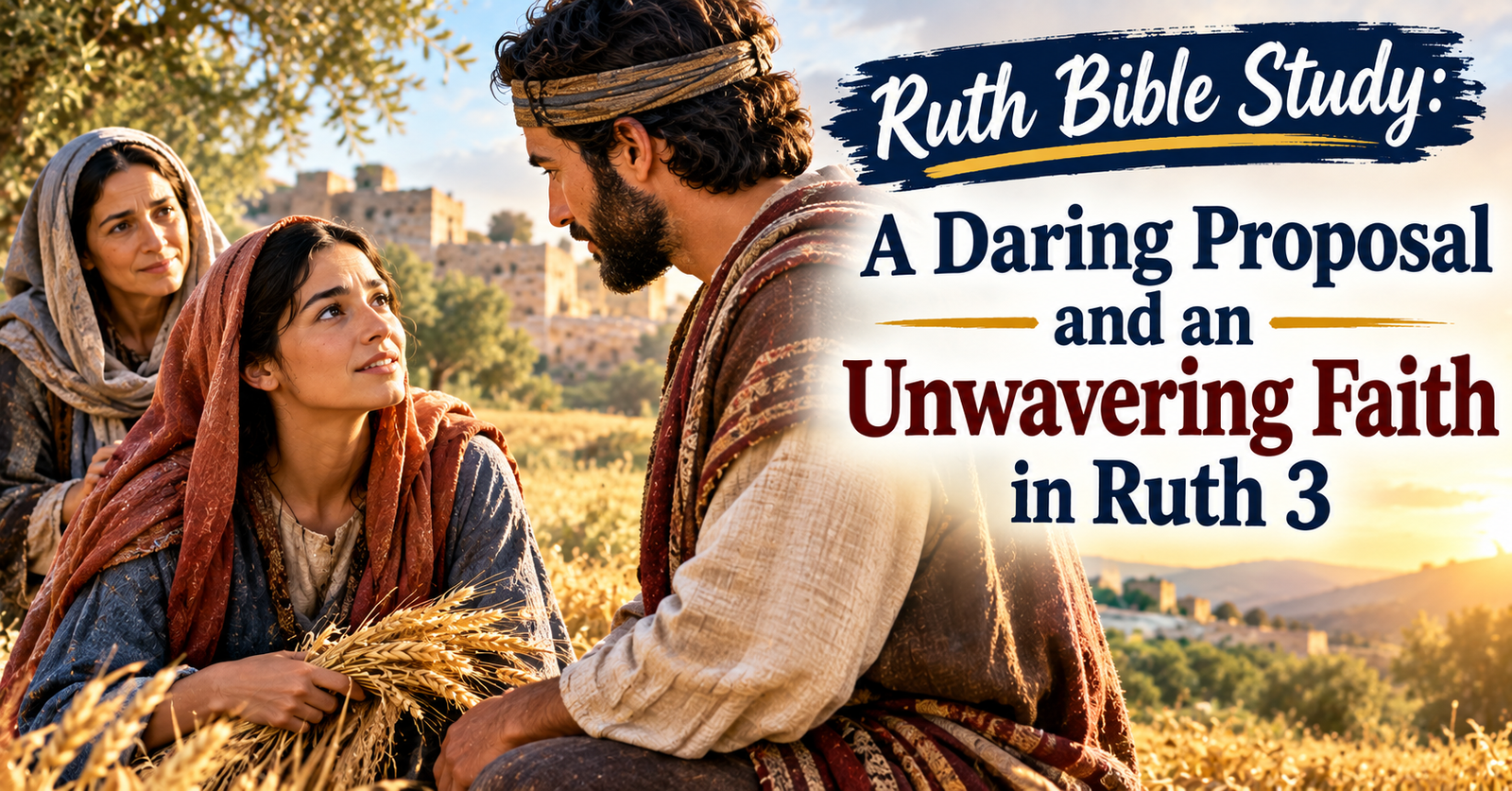
By the time we reach the third chapter of this biblical story, I always tell my Bible study group that the story has been quietly progressing toward this exact moment since the first two chapters. Ruth has already shown herself loyal and hardworking, gleaning in the fields without complaint, and now Naomi comes up with a daring plan meant to see Ruth married, settled, and given a good home. What Naomi proposes requires real courage and bravery from Ruth, because approaching Boaz at night on the threshing floor was a genuinely bold task, the kind of challenge that requires both determination and faithfulness to carry out. I find it remarkable how Ruth’s obedience to Naomi’s plan never once looks like blind following; it’s paired with her own willingness, her own quiet strength of character, choosing commitment over comfort for the sake of their shared future.
This chapter of Scripture, Ruth 3, is really about relationship — the bond between Naomi and Ruth, built through loyalty, dedication, and mutual responsibility, now stepping into a new chapter of life together. Ruth’s perseverance that night opens the door to redemption, marriage, and eventually a whole family, all resting on faith and trust that God’s guidance and provision would meet them at just the right settlement. I’ve always found hope in how this small Bible story shows that courage paired with faithfulness can rewrite a future, bringing blessing not just to one home but to an entire community watching Naomi and Ruth step, together, toward Boaz and everything that opportunity would come to mean.
There’s something deeply moving about watching an older woman guide a younger one with nothing but genuine care, and that’s exactly what we get when Naomi steps forward with her advice. Here at Joyful Moments in Christ, I’ve come to see this moment as one of the quiet turning points in the whole book of Ruth. After spending the first two chapters watching Ruth prove her loyalty through hard work in the fields, Naomi now offers something different — not just comfort, but a daring plan rooted in real wisdom and careful guidance. As the story progresses into Ruth 3, whether you’re reading the Ruth 3 WEB, Ruth 3 NIV, Ruth 3 ESV, or Ruth 3 GNT, you’ll notice this isn’t advice given lightly. Naomi’s plan requires Ruth to be bold, to accept a challenge, a task that would test even the most loyal and hardworking woman. I remember reading this passage years ago and thinking how easy it would’ve been for Naomi to say nothing at all, yet she chose responsibility over silence.
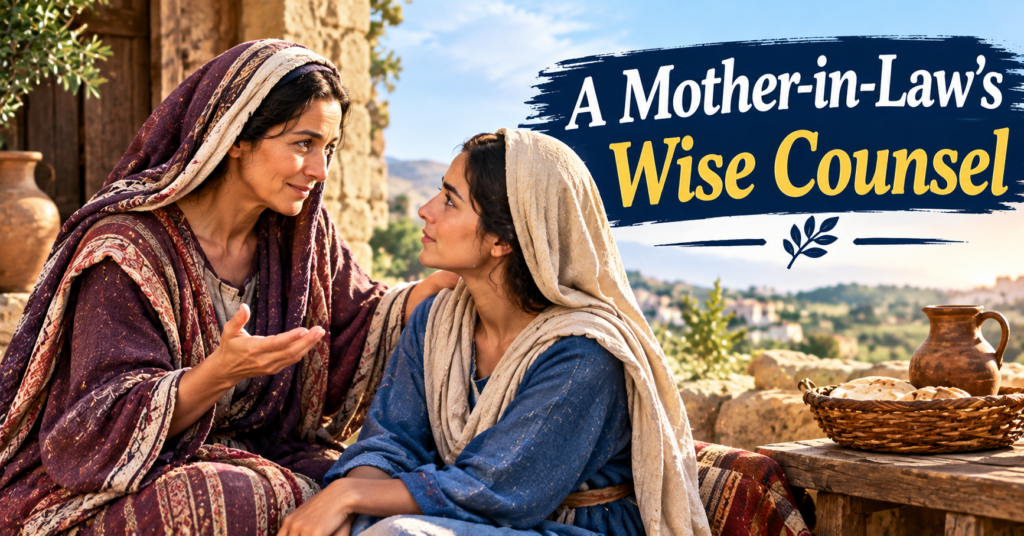
What makes this relationship between the two women so beautiful is the trust running underneath every word Naomi speaks. She isn’t scheming for herself; she’s thinking of Ruth’s future, hoping for marriage, a home, and a family that Ruth can finally call her own. This plan carries real purpose — the opportunity for Ruth to be married, settled, and welcomed into a good home, a settled life built on more than just circumstance. It takes courage and boldness to follow such counsel, and it takes faith, commitment, and devotion to see it through with perseverance. As Ruth’s character continues to unfold in this biblical story, this piece of Bible study from the Old Testament in Ruth chapter 3 reminds me that support between people who love each other often looks like handing over a plan built on hope — and trusting the other person to carry it forward with determination. That’s Ruth’s journey in a nutshell, guided by hands wiser than her own.
When Boaz wakes to find Ruth at his feet, his response carries the same steady character I’ve come to expect from him every time I dig into this part of the book. He doesn’t panic or shame her; instead, he tells her she is blessed by Yahweh, calling her “my daughter” with genuine warmth. I’ve always loved how he frames her request as an act of kindness greater in the latter end than in the beginning, noticing she didn’t run after the young men, whether poor or rich. He tells her not to be afraid, reassuring her that all the people in the city already know she is a worthy woman of noble character. Then comes the practical part: Boaz admits he is a near kinsman, a kinsman and relative with real standing, but he’s honest enough to mention there is a nearer kinsman with a closer claim, someone who must get the chance to act first. He asks her to stay the night, and in the morning promises to perform his kinsman duty, that sacred duty of the guardian redeemer, or redeemer, offering her protection and a clear promise of reassurance. What strikes me most, and what I try to highlight in any Christian teaching I share, is how above board this whole exchange stays — no hint of seduction or a seductress here, only humility, humbleness, mutual respect, and a deeply respectful, honorable tone built on integrity. Even on the threshing floor, overnight, in what could easily look like a compromising situation, both guard her safety and refuse to let her wander into scandal. Boaz gives an immediate answer rather than leaving her disappointed, telling her to listen carefully: this marriage proposal, rooted in kinsman-redeemer law, is no large favor taken lightly — it’s the heart of Ruth 3:11, a memory verse I return to often, speaking straight from Scripture about faith, responsibility, commitment, trust, and honor. This kind of marriage, built on noble character rather than convenience, is exactly why Ruth’s story still matters.

The wait that follows is its own quiet lesson. Ruth stays until Boaz feels it’s still too dark to be recognized, rising before the earliest hour, well before sunrise, because both care deeply about her reputation and want her protection intact under kinsman redeemer custom. Boaz keeps things reserved, making sure none of the men at the threshing floor know a safe woman spent the night there. I love how practical his advice becomes come morning — he doesn’t send her home with empty words, but with six measures of barley wrapped in her mantle, a tangible gift of food and provision that speaks louder than any payment. Nothing here suggests sexual services or promiscuity; the whole outcome rests on obedience, on following Naomi’s instructions exactly as a good wife, a future wife, would. When Ruth returns to her mother-in-law, their conversation is full of care and caring, the kind only Ruth and Naomi could share after all they’ve survived. Naomi listens to every word, confident the matter will be resolved quickly, and Ruth simply waits at home for Boaz’s return and his final answer. That season of waiting required real patience, built on wisdom and guidance rather than worry, and that’s what makes Naomi’s confidence so remarkable — she trusted divine providence and Yahweh’s hand in it all. This stretch of Ruth 3:14-18, straight from the Bible and Scripture, shows generosity, kindness, and redemption working through family and relationship toward a shared future. Ruth’s character and Boaz’s character both shine here — she’s proven herself a noble woman, and he’s proven himself a man of faithful care, holding onto hope until the guardian redeemer business could rightly be settled.