
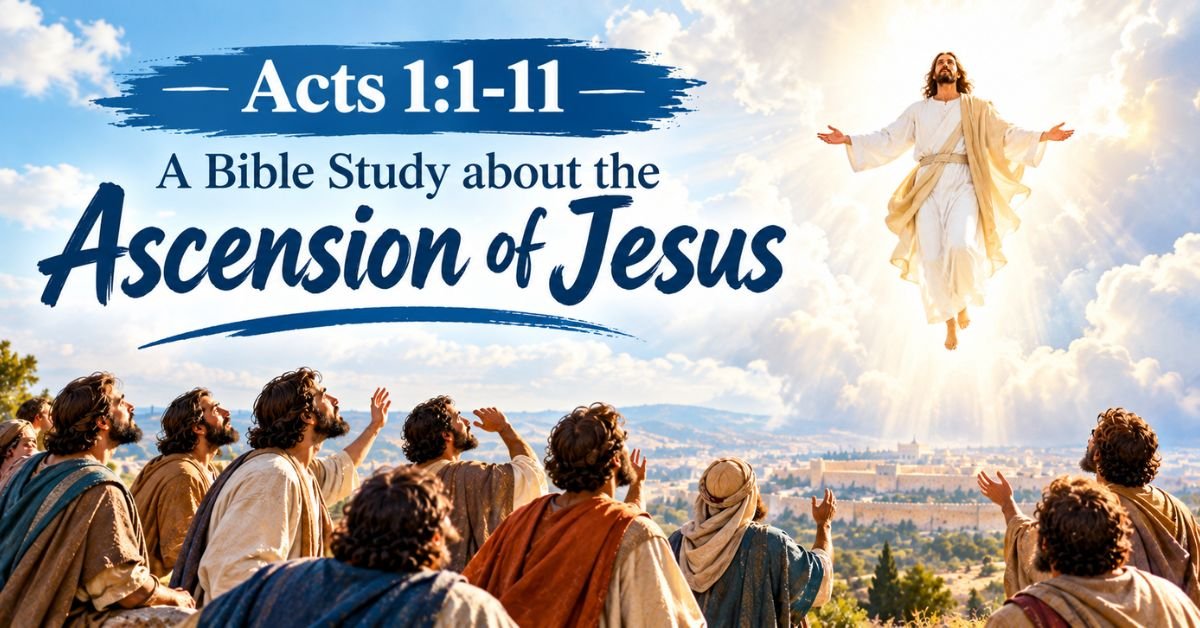
The Ascension of Jesus into heaven is one of those truths that gives real hope to anyone reading the Bible, and the beginning verses of Acts, also called the Acts of the Apostles, lay out these important events with striking simplicity. Luke starts by reminding us that Jesus, once raised from the dead, showed Himself alive to His followers, proving His resurrection wasn’t a rumor but a lived reality, and that this same living Savior would soon ascend to heaven before the eyes of those who loved Him most. I still remember the first time this truth actually sank in for me realizing that the same Father who called Jesus home is the same one preparing a future of eternal life for every believer who trusts Him now.
What makes this passage so powerful isn’t just that Jesus left; it’s that He promised a return of Jesus, a genuine second coming, meaning His going up was never meant to feel like a goodbye but more like a “see you soon.” He didn’t just walk out of life and return to dust like the rest of the dead; He was raised, He is alive, and He is coming back and that single thread of promise is what turns the Ascension from a strange historical moment into the anchor of real hope for every reader of the Bible today.
Luke, the same writer behind the Gospel of Luke, opens Acts as a letter to Theophilus, picking up right where his first book left off with Jesus, raised from the dead, proving His resurrection was real by showing Himself alive through many convincing proofs after He had suffered. For forty days He kept appearing to the disciples He had chosen, teaching them about the Kingdom of God and God’s Kingdom, and while assembled together and gathered with them in Jerusalem, He gave a commandment through the Holy Spirit, telling the apostles to wait there for the promise of the Father reminding them that John baptized with water, but they would soon be baptized in the Holy Spirit Himself. I’ve always loved how personal this moment feels; even after everything they’d witnessed, the disciples still asked the Lord if He was now restoring the kingdom to Israel, showing how easy it is to want God’s timing to match our own.

Jesus didn’t answer their question about Israel directly; instead, He redirected their focus to real authority and power that was coming, telling them they would become witnesses starting in Jerusalem, then Judea and Samaria, and all the way to the uttermost parts of the earth and the ends of the earth among the nations that’s the heart of apostleship, mission, discipleship, and lasting testimony. Then, right before their eyes, came the ascension of Jesus: He was taken up, a cloud hid Him from their looking, steadfastly watching Him rise into the sky as He was received up into the heavenly realm. As they stood there from Galilee, two men in white clothing appeared and promised He would come back the same way He left a sure return of Jesus, a real second coming, sealing an eternal Kingdom built on faith, hope, and salvation. What I take from this every time I teach it is that the risen Christ, the living Christ, gave His church real Holy Spirit power to be spiritual witnesses of the good news, resting on God’s authority and divine authority, the heavenly Father’s own divine promise, so that Jesus’ ministry, Jesus’ resurrection, and Jesus’ ascension all point toward His promised heavenly return, giving every believer today real resurrection hope, heavenly hope, heavenly glory, spiritual power, and a divine command to live out Christian witness and resurrection life while we wait for Christ’s return, the baptism in the Holy Spirit, and the full Kingdom restoration He promised.
Who was Luke? He was the same physician and writer who penned the Gospel bearing his name, and he opens this second letter to Theophilus with a clear purpose in mind continuing the story of what Jesus did and taught. The full title, Acts of the Apostles, tells you exactly what to expect: a biblical account of what the apostles did after Jesus returned to heaven, carrying forward His apostolic ministry through their own hands and voices. Right from the first chapter, Luke is showing us that this book isn’t just history for history’s sake; it’s a bridge connecting the resurrection and ascension of Christ to the ongoing mission of His disciples and followers here on earth. I’ve found that once you see Acts through this lens, it stops feeling like a random sequel and starts reading like the natural next chapter of one continuous story.

What strikes me most, having taught through this book several times, is how Luke frames the heavenly return of Jesus not as an ending but as the starting gun for everything that follows the testimony, the mission, and the shape of Christian teaching we still lean on today. Once Jesus returned to heaven, the weight of carrying His message forward landed on ordinary men who had walked with Him, and Luke wanted Theophilus, and every reader since, to trust that this transition from Christ’s earthly walk to His heavenly realm was no accident but a deliberate, Spirit-led handoff to the apostles and the church they were about to build.
Before His resurrection, and even during the forty days afterward, Jesus kept opening up the Scriptures, walking His disciples through Moses and the prophets to show how everything pointed to the kingdom of God. This teaching wasn’t just theology for the sake of knowledge; it was preparation, because right after this, in the opening of the Acts of the Apostles, He told them they would become witnesses starting in Jerusalem, moving out to Judea and Samaria, and eventually reaching the uttermost parts of the earth. I remember tracing this exact pattern on a map once during a Bible study, and it hit me how the New Testament itself follows that same outward path the gospel moving from a small room in Jerusalem all the way through Paul’s travels across Asia Minor, Europe, and even into Africa, carried by Christian evangelists who took the gospel message to the wider world.
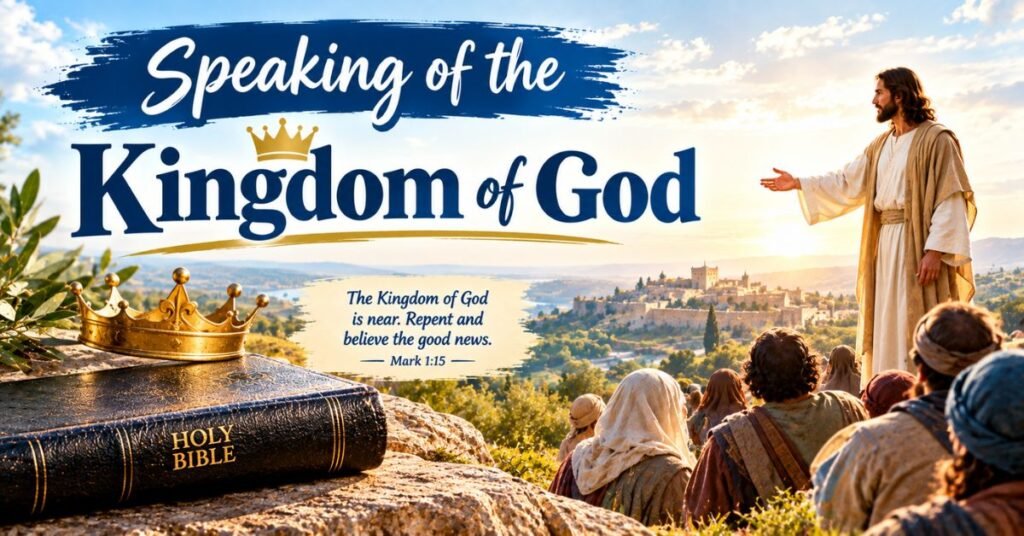
That same mission and ministry didn’t stop with the original disciples or the apostles we read about in Bible verses and letters; it’s still ours to carry, whether that means foreign missionary work overseas or being a hometown missionary among family, friends, and neighborhoods we already know. I’ve come to see that sharing your testimony with a stranger takes the same conviction as any missionary role, because the Earth still needs witness to what these disciples learned firsthand real Christian evangelism doesn’t need a passport, just an informed opportunity and the willingness to follow Jesus wherever your lifetime places you, near or far.
Discussion Question #2
Reading through this part of Acts again, it’s worth pausing to ask yourself what it really meant for Jesus to tell His disciples they would be witnesses in Jerusalem, Judea, Samaria, and to the uttermost parts of the earth because that command still shapes how we understand mission and witness today. Looking at the Bible verses surrounding this moment, especially how the New Testament opens with those last forty days of teaching rooted in the Scriptures, I always encourage people to ask what part of that outward circle home, neighborhood, or Earth itself they’ve quietly been avoiding.
For me, sitting with this question personally reshaped how I saw my own responsibility toward the gospel; it’s easy to admire the apostles and their resurrection-shaped courage from a distance, but Jesus’ teachings were never meant to stay as biblical revelation we simply study. They were meant to become apostolic testimony we live out, keeping Christian witness, kingdom proclamation, discipleship, and everyday evangelism part of ordinary life, not just something reserved for trained ministers.
Discussion Question #3
So here’s the honest question worth sitting with: did Jesus intend for His disciples to finish being witnesses on their own, or was their mission always meant to continue far beyond that first generation? Reading the text carefully, nothing suggests the assignment was ever meant to be complete within their lifetime alone which means it lands, quite personally, on us today.
I’ve wrestled with this responsibility myself, especially on days when it felt easier to stay quiet than to carry out what Christian mission and apostolic mission actually ask of us. But the reasons behind that calling haven’t expired discipleship, evangelism, and simple gospel witness are still how the church keeps spreading the gospel, and choosing to be a witness for Jesus now is really just this ongoing mission continuation still playing out through ordinary, willing hands like mine and yours.
Before Jesus ascended, He reminded His disciples of a promised gift from the Father, telling them not to leave Jerusalem until they received this gift He had promised. John the Baptist had already prepared the way, admitting he wasn’t worthy to untie the sandals of the one mightier than him, and that while he offered a baptism of repentance and a baptism of forgiveness with water for repentance and cleansing from past sin, someone greater would soon come baptizing with the Holy Spirit Himself (Matthew 3:11). Jesus confirmed this directly, saying that John baptized with water, but they would be baptized with the Holy Spirit not many days from then, and that this Spirit baptism would bring real power to be witnesses in Jerusalem, Judea, Samaria, and to the uttermost parts of the earth (Acts 1:5-8). I’ve always found it moving that this divine promise wasn’t abstract it was the actual engine behind how the gospel message would spread across the whole world.
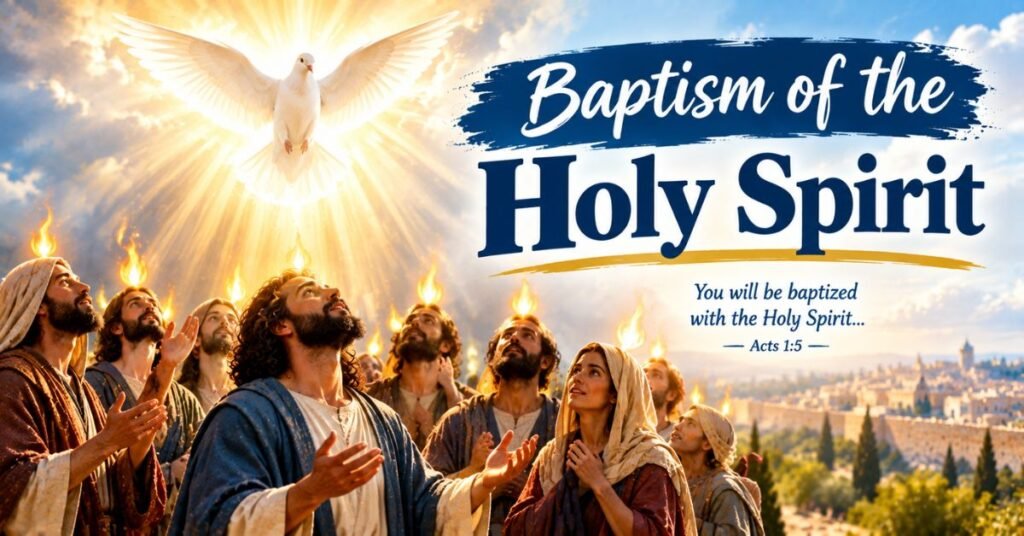
What this spiritual empowerment produces isn’t just boldness to preach; it’s a new life shaped by Jesus as Lord, evidenced by the fruit of the Spirit love, joy, peace, patience, kindness, goodness, faith, gentleness, and self-control (Galatians 5:22-23). In my own walk, I’ve noticed that Holy Spirit power rarely announces itself loudly at first; it shows up quietly in a renewed life, in small acts of faithfulness, and in a meaningful life marked more by character than performance. That’s really the heart of Christian service and spiritual transformation the same Spirit who once launched the mission and evangelism across Jerusalem, Judea, and Samaria is still doing that new beginning work in ordinary believers today, turning witness and discipleship into something lived out, not just talked about.
Discussion Question #4
It’s worth pausing here and asking yourself honestly what this baptism of the Spirit actually changed for the disciples, and whether that same spiritual power feels real in your own Christian life today. Comparing John’s water baptism of repentance with the Spirit baptism Jesus promised in the Bible verses of Acts 1:5-8, I think the real question isn’t just doctrinal it’s personal: has your own forgiveness and cleansing from past sin actually produced visible spiritual fruit, or has it stayed a private, unshared promise?
I ask myself this often, because it’s easy to celebrate the theology behind spiritual gifts while forgetting that the whole point was always mission helping spread the gospel to the world. When I look honestly at my own Christian service, I find the clearest proof of the Holy Spirit’s work isn’t excitement but steady faithfulness, the quiet kind that keeps showing up for witness and discipleship long after the initial feeling fades.
Discussion Question #5
Reading Acts 1:5-8 alongside Galatians 5:22-23 raises an interesting distinction worth discussing: the difference between the fruit of the Spirit and the spiritual gifts the disciples and later apostles received, including healing, miracles, and other miraculous powers beyond the more common powers of daily character. It’s tempting to chase the dramatic signs and healing ministry stories while overlooking that love, joy, peace, patience, kindness, goodness, faith, gentleness, and self-control are just as much proof of the Holy Spirit gifts at work as any miraculous gift could be.
From my own experience walking alongside other believers, I’ve noticed that lasting spiritual maturity rarely comes from chasing divine power for its own sake; it grows slowly through spiritual growth and spiritual transformation in ordinary Christian character. The baptism of the Holy Spirit was never meant to end with a spectacular moment it was meant to produce a Spirit-filled life, shaped by God’s Spirit, where spiritual abilities serve real ministry, witness, and gospel work, and where faith, joy, and peace matter every bit as much as any spiritual ability on display.
When the disciples asked Jesus in Acts 1:6 whether He would now restore the kingdom to Israel, freeing them from Rome and their Roman oppressors, you can almost feel their hope for a political rise after so much fall and freedom finally within reach. But Jesus didn’t rebuke them for asking, nor did He hand the moment over to the devil’s agenda of quick political power; instead, He redirected them toward waiting for the Holy Spirit, reminding them that a short time of preparation mattered more than rushing into the world with half a plan. I think about this often when I feel impatient myself, wanting the gospel message to spread instantly instead of trusting God’s true purpose for how people come to know Jesus and love Jesus in their own time.

That same patient, miraculous unfolding shows up later in a striking vision given to Paul, then still called Saul, on the road to Damascus, when a light from the sky flashed around him and a voice from the resurrection Lord asked why he continued to persecute Him (Acts 9:3-6). The heavenly voice simply told him what to do, and Saul’s words, actions, and entire life as a person turned overnight proof that God’s timing is rarely about earth bound urgency but about the right city, the right moment, and the right obedience to a clear calling. Living in a sinful world full of suffering, wars, and unresolved problems, it’s tempting to ask why Jesus doesn’t just end the world and settle every ache at once, but I’ve come to believe His delay is actually merciful, giving more souls the chance to turn to Jesus before eternity in heaven is sealed. As a Christian, that divine purpose shapes my own decision to follow Jesus daily, trusting that the return of Jesus and salvation through repentance and the gospel are worth the wait, even while spiritual battle, evangelism, missionary work, and everyday discipleship continue building toward the second coming and the spiritual freedom only He can give.
Discussion Question #6
It’s fair to sit with the honest tension of this passage and ask why sin and suffering still fill the world if Jesus could simply return and set everything right today; waiting on God rarely feels comfortable to a Christian wrestling with real frustration over an unresolved situation. I’ve had seasons of real difficulty where I wished a hard chapter of life had been resolved sooner, and while there’s nothing fabulous about a long, hard period, I’ve slowly learned there are good reasons behind God allowing sin and suffering to continue a little longer, even today.
Sitting with that tension has taught me more about faith, patience, and hope than any easy season ever could, because it forces you to lean fully on mercy and trust divine timing over your own preferred schedule. That kind of spiritual growth and Christian response to hardship choosing perseverance through trials, holding onto trust, compassion, forgiveness, and the promise of salvation through repentance is really what shapes real hope in Christ, keeping eternal life and heavenly hope in view even while the sinful world and human suffering press in, and even while we keep waiting for Jesus and the full return of Christ with steady faith in God.
After Jesus finished His last chance to teach the disciples about their mission in the world, He didn’t just walk away He lifted up on His own, seemingly by himself, and simply floats upward until the clouds swallowed Him and He disappears from sight. The sheer shock of that moment left them stunned, frozen in place, eyes locked on the sky long after there was anything left to see, which honestly makes me smile a little every time I read it, because I imagine I’d have reacted the exact same way. That’s when two angels showed up, gently moving them out of their trance, essentially informed them that staring at empty heaven wouldn’t bring Him back any sooner, promising instead that this same Jesus would come back just as suddenly as He had left.

That instant the ascension of Jesus rising through the clouds into the heavenly realm set the whole tone for the Christian hope we still carry today, because the angels’ words about His return weren’t vague comfort; they were a real divine promise of Jesus’ return and the second coming still to come. I’ve found that this small, almost overlooked scene actually teaches something big about discipleship: the disciples could have stayed frozen forever, but they were nudged back into their gospel teaching, their witness, and their apostolic mission, trusting the promise of the risen Jesus rather than clinging to the sky. In my own faith, that’s the balance I try to hold genuine wonder at the heavenly ascension and the reality of the heavenly kingdom, paired with the practical spiritual mission of living out eternal life now, fully confident in the future return of Jesus Christ and His lasting divine presence among us.