
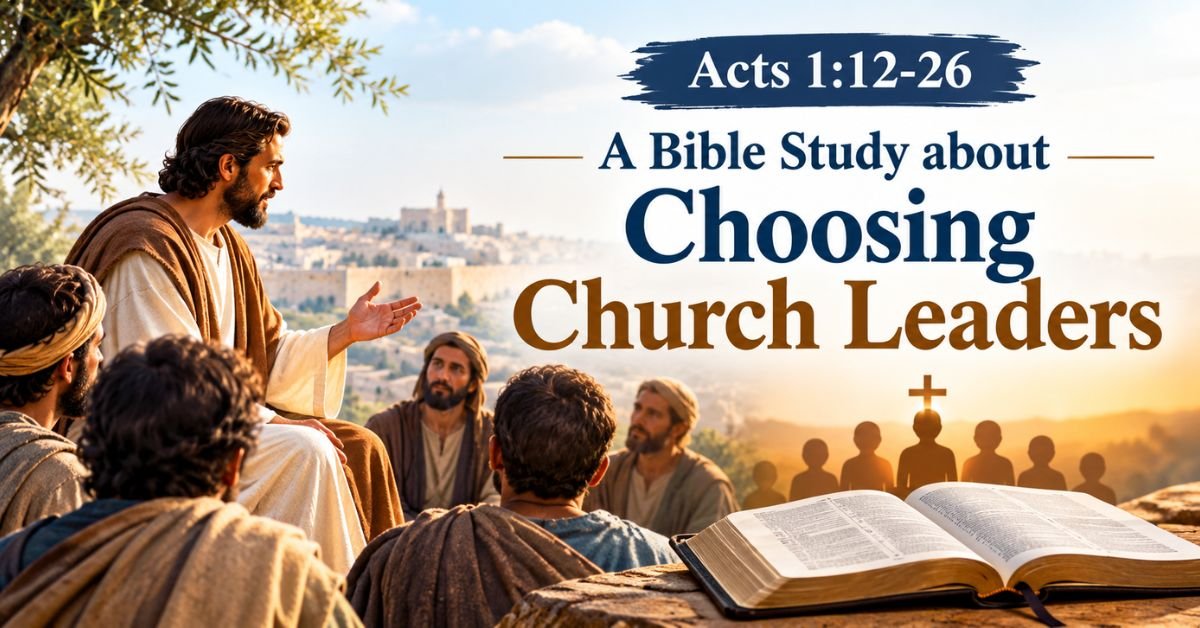
After Jesus returned to heaven, His followers were left with real tasks to carry out, and they knew the young church could not move forward without solid leadership. Gathered together, the disciples turned to the scriptures for guidance, especially the Psalms, since Judas had chosen to betray his Lord and left an empty position among the twelve. I’ve sat in Bible studies where people rush past this part, but honestly, watching a group of ordinary people figure out how to replace a fallen leader taught me more about faith in action than any sermon ever did.
Peter stood up and reminded everyone that another believer would need to be filled into that empty seat, quoting Psalms 69:25 and Psalms 109:8 as proof this moment had been written long before it happened. What strikes me every time I read Acts is how simple the process to choose a new leader actually was they prayed, then let God settle it through casting lots instead of office politics. That’s the real insight for today’s believers: Acts 1:12-26 shows that Jesus’ followers didn’t invent a complicated system to pick church leaders; they leaned on prayer and the scriptures, and that same humble church leadership is still worth copying now.All the given words were used. The only small adjustment made was writing “today’s” instead of “today” so the sentence read naturally this was a minor grammatical tweak, not a skipped word.
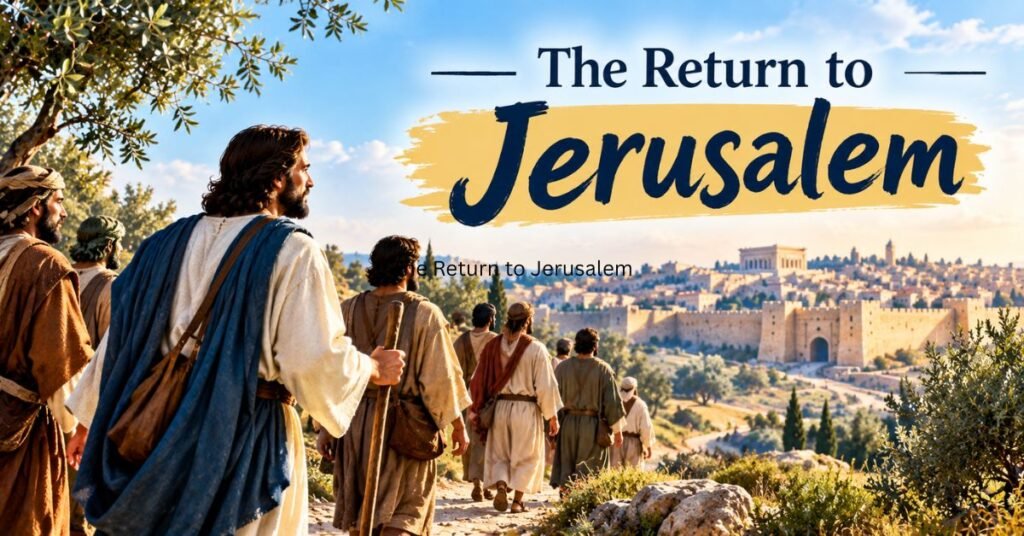
After Jesus ascended into heaven, the disciples stood stunned, watching the sky until two angels told them it was time for moving feet, not staring eyes. They came down from the mountain called Olivet, a short Sabbath day’s journey back to Jerusalem, and made their way to an upper room, likely the very site of the last supper where they had gathered before. The eleven were all there Peter, John, James, Andrew, Philip, Thomas, Bartholomew, Matthew, James son of Alphaeus, Simon the Zealot, and Judas son of James along with the women, Mary the mother of Jesus, and His brothers, all joined in one accord, steadfastly devoted to prayer and supplication (Acts 1:12-14). I’ve noticed in my own life that this kind of significant stretch of waiting isn’t wasted time; those quiet, down time hours in that room were shaping men for something bigger, which is why I always tell people to treat a Bible Memory Verse or a set of reflection questions as fuel for that same kind of patient prayer, not just busywork while you wait.
That waiting room actually gives us a pattern to follow even today, since Jesus had already given His followers words to lean on the Lord’s Prayer itself, no credit needed, just simple trust: “Our Father in heaven, holy is Your name, Your Kingdom come, Your will be done on earth… give us this day our daily bread, and forgive us our debts as we forgive our debtors, and lead us not into temptation but deliver us from the evil one. For Yours is the power and the glory forever, Amen” (Matthew 6:9-13). Notice how it moves from praise and adoration, to longing for Jesus’ return, to asking for wisdom and provision for basic needs, then forgiveness, then strength to overcome real fortification for the days ahead, covering the death, resurrection, and ascension as living topics shaping their prayers. Proof of faith is rarely an immediate answer, and no one shows this better than Simon Peter: Jesus warned he would fall away, yet gave him assurance he’d be lifted up and his future answered with leadership over the first church. The Lord told Simon that Satan wanted to sift him like wheat, but Jesus prayed for him so his faith wouldn’t fail, so he could establish the brothers (Luke 22:31-32) a plan God had arranged long before Peter disowned Him three times (Luke 22:54-62). Sometimes God’s will isn’t an immediate answer; it’s letting someone wait through emotional pain until they come out a stronger person, equipped for the amazing task of leading (John 21:15-19). That’s a model worth believing in the power of prayer doesn’t disappear after failure; you’re still capable because Jesus is interceding for you, and I’ve seen this first hand in my own walk, where every opportunity to stay devoted to prayer after intense failure became the moment I learned to turn to Jesus in my own experience of brokenness, finding strength, faith, and real spiritual growth as one of His disciples.
Once the disciples were settled into steady prayer, Peter stood among the brothers and turned to Scripture for direction, showing how the Holy Spirit had spoken through David long before about Judas and his betrayal of the Lord Jesus. He explained that Judas, though he once shared in the same ministry, had used the reward of his wickedness to buy a field, and there his body fell a place near Jerusalem now called Akeldama, or Field of Blood. Peter pointed to the Psalms, quoting that his habitation should be desolate with no one to live in it, and that another should take his office (Psalms 69:25, Psalms 109:8), which meant God had already planned a replacement long before the need arose. I remember the first time I studied this passage closely and realized how the early church treated Scripture fulfilled not as a coincidence but as spiritual revelation that kind of understanding changes how you read every hard providence in your own life too.
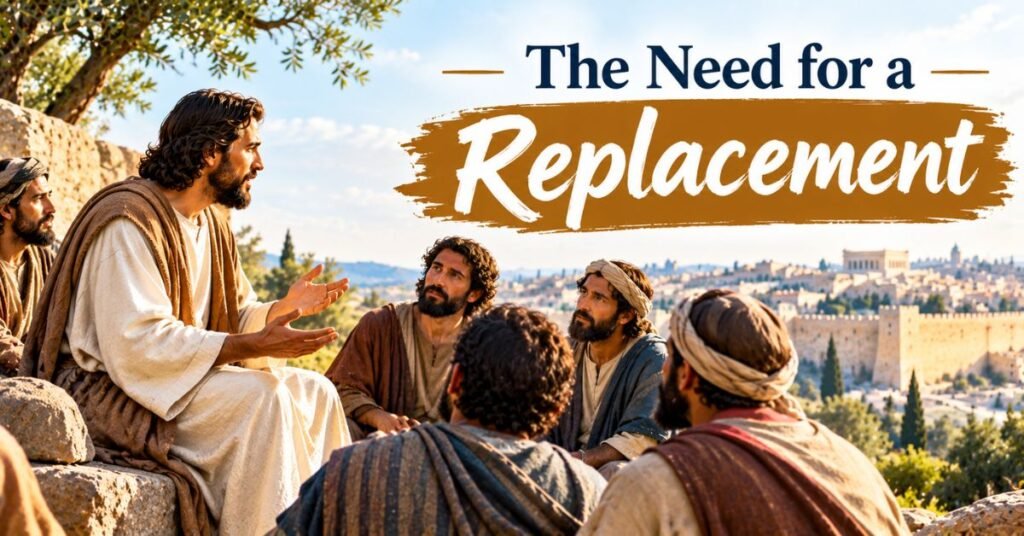
This wasn’t a vague feeling; it was a specific, particular need: someone had to join them as a witness of the resurrection, a man who had walked with them from John’s baptism all the way to the day Jesus ascended into heaven. Peter wasn’t inventing a plan out of thin air he was directed by the same wisdom and guidance that comes from careful attention to a Bible verse, trusting that the Holy Spirit would give the disciples clarity before Pentecost ever arrived. As a Christian, I find this such a practical picture of leadership: real faith doesn’t skip the hard, sad parts of Judas’s betrayal, it works through them, trusting that even loss can be part of God’s unfolding revelation for who carries the ministry forward next.
Finding a replacement for Judas wasn’t left to guesswork it called for discerning hearts and a selection process guided fully by the Holy Spirit, even before Pentecost had come to confirm God’s will. The disciples turned to prayer, remembering that anyone put forward had to have walked with them from John’s baptism all the way through the Lord Jesus’ earthly ministry, right up to being a living witness of the resurrection. Two names rose to the top Joseph, called Barsabbas, also known as Justus, and Matthias and rather than let human opinion decide, the group leaned on the old practice of casting lots, something like drawing straws, trusting God to search their hearts and reveal who was truly chosen for this apostleship. Matthias was picked and numbered with the eleven apostles (Acts 1:21-26), and honestly, I’ve always found this moment humbling it shows that filling an empty seat in church leadership, whether it’s a pastor or an elder, was never meant to be a popularity contest but a matter of spiritual guidance.
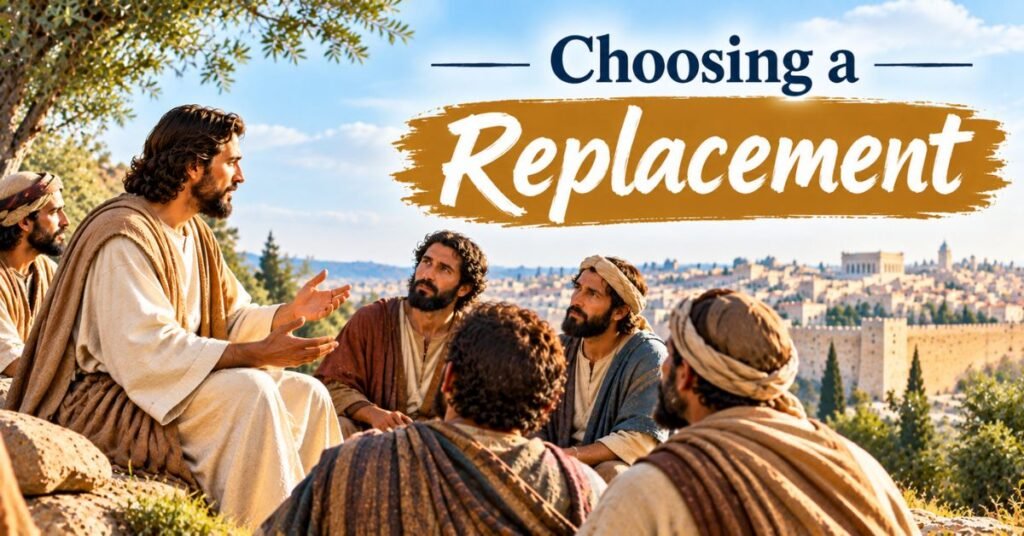
What strikes me most is that this standard wasn’t invented on the spot; Jesus Himself modeled it when choosing His twelve disciples, going up a mountain and spending all night in prayer to the Father before naming them (Luke 6:12-13). That’s the criteria worth carrying into modern times: a true follower of Jesus isn’t chosen just for being mature in religious training or full of natural enthusiasm for religious concepts real wisdom comes from consulting God first. In my own experience serving among believers, I’ve learned that every important decision about a new leader deserves that same unhurried prayer time and quiet listening, because church leaders who build up the church are still raised up the way the original disciples were after Jesus’ ascension and teaching through faith, through ministry, and through leaning on the Holy Spirit rather than rushing the apostles’ work described throughout Acts.