
Bible Study
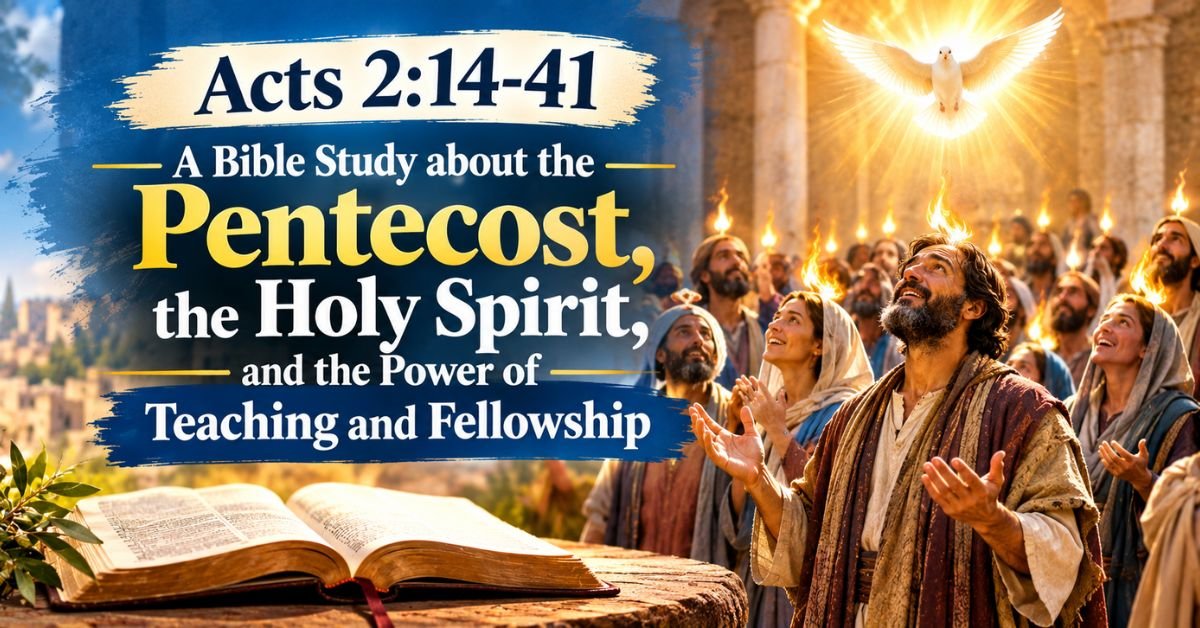
In the second chapter of Acts, often simply called Chapter 2, the story of Pentecost unfolds as something no one in the room could have expected: flames of fire descended upon Jesus’ disciples, resting over them like tongues of fire, and suddenly these ordinary disciples began to speak languages they couldn’t possibly know on their own. Onlookers were impressed, almost stunned, because each person heard God’s message being proclaimed in their own native language, as if the barrier of native language itself had simply dissolved in that moment. Some in the crowd even accused the disciples of being drunk, unable to explain otherwise how ordinary men could suddenly speak about God with such boldness and clarity across so many tongues at once.
I find this passage endlessly moving, because it captures the exact instant these men became true witnesses of Jesus and of God, not through study alone but through a message placed directly into their mouths by the Spirit. What strikes me every time I sit with this text is how the heard the message was for everyone in that crowd, regardless of where they came from, since the languages spoken that day made sure no one was left out of understanding God’s message. It’s a picture I carry with me even now: that real fellowship and real teaching often start not from having all the right words prepared in advance, but from being willing to let something greater than ourselves speak through us, the same way fire once rested on those first disciples and turned them into witnesses the whole world could understand.
When Peter stood up that morning, alongside the eleven, and lifted up his voice to speak to the crowd gathered from Judea and Jerusalem, he wasn’t just addressing a random group, he was directly answering an accusation. Some in the each person-filled crowd had begun to settle on the idea that this group of about 120 people, the one hundred twenty whose number of names is even recorded back in Acts 1:15, must be drunken, since it was only the third hour of the day, far too early in the morning for anyone to be drinking alcohol. But Peter’s answer, laid out plainly in Acts 2:14-15, wasn’t defensive in a nervous way; it was calm and full of faith. He explained that what looked like something almost like beams of light resting on the disciples wasn’t drunkenness at all, but the Holy Spirit, a gift poured out during Pentecost, allowing ordinary men to speak in languages and a native language not their own, even a foreign country’s own tongue, so that everyone who heard the words could listen and understand God’s message for themselves. The reaction of the crowd shifted the moment they realized this was no miracle of intoxication but a true sign meant to turn witnesses into believers, the very seed of the church we still read about in the Bible today.
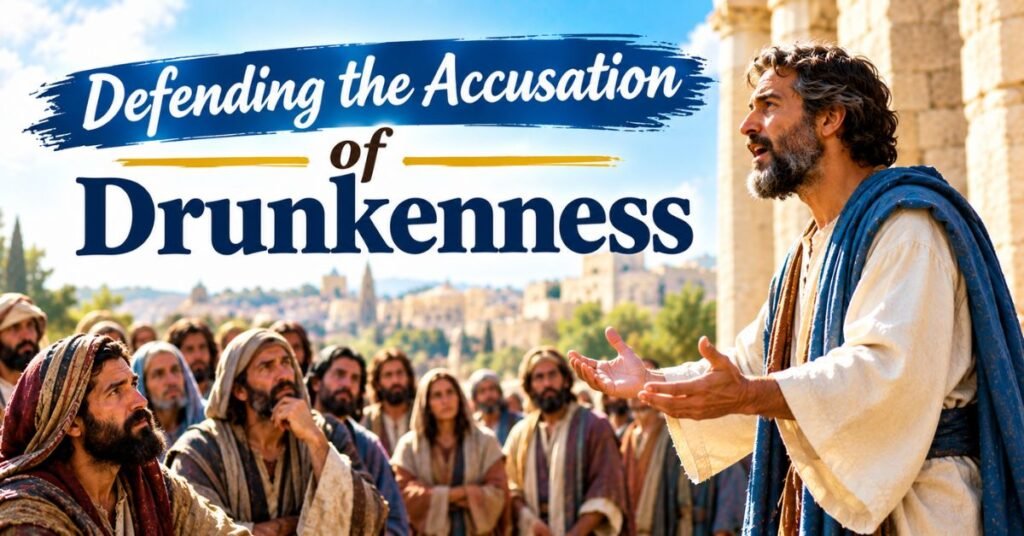
I think about this scene often, because I’ve personally witnessed Christians do strange things in the name of faith that outsiders were quick to claim, or claimed, didn’t make any sense. I remember families who packed up their kids and left comfortable lives behind, following God’s direction toward faraway places, becoming missionaries simply because they felt called by God to go. Some friends enthusiastically embraced that choice and supported them fully, while others offered no support at all; I’ve heard people say they thought the whole thing seemed like the deep end, and I’ve watched some quietly wrote off that kind of calling as fanatical. But when I sit with Peter’s defense in this passage, I’m reminded that God’s work rarely looks reasonable to casual witnesses standing on the outside; Christian actions born from real Christian faith often demand a direction only the person living it can fully justify. If you’ve ever been asked why you’d do something that doesn’t make sense to yourself or to others, you already understand the result of following God: it isn’t about proving your obedience through logic, but trusting that the decision lines up with God’s will, even when a whole crowd assumes you must be out of your mind. That, to me, is the real heart of a Christian life, one built not on approval but on quiet faithfulness, and on being a witness to something bigger than the moment you’re standing in.
When Peter stood to defend the disciples against the charge that they’d had too much alcohol, he didn’t just deny it, he reached straight back into scripture, quoting the prophet Joel, whose prophecy, given about 400 B.C., had predicted this exact moment centuries before Pentecost ever happened. In Acts 2:16-21, Peter draws a direct comparison, laying the text of Joel side by side with what the crowd had just witnessed, showing how closely the events of that morning matched the prophetic prediction: in the last days, God said, He would pour out His Spirit on all flesh, so that sons and daughters would prophesy, young men would see visions, old men would dream dreams, and even servants and handmaidens would receive that same Spirit poured out upon them. Joel had also spoken of wonders and signs in the sky and on the earth, blood and fire and billows of smoke, the sun turned to darkness and the moon to blood before the great day, the glorious day, the day of the Lord arrives, and Peter ties this straight to Jesus, reminding them that whoever will call on the name of the Lord will be saved, pointing them toward salvation made possible through the death of Jesus and pointing ahead, too, toward His second coming.
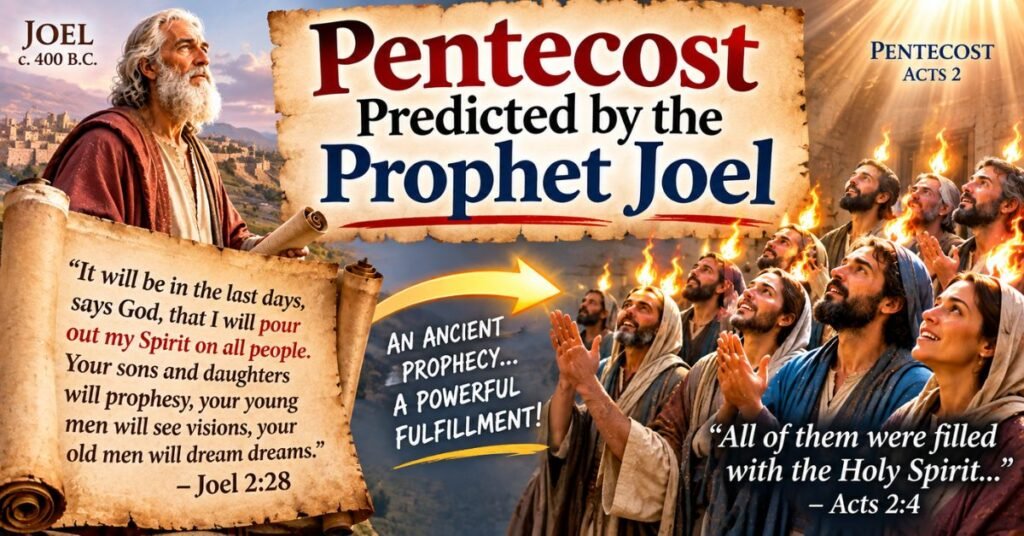
I find this section genuinely moving to sit with, because Peter isn’t inventing a new idea on the spot, he’s showing scripture validation for something the people in front of him could barely explain. He reminds them of Acts 1:5 and Acts 2:11, tying the Holy Spirit baptism they’d just watched happen to the water baptism John once practiced, and to the mighty works of God now being declared in languages none of the disciples had learned, real speaking carried by something far greater than themselves. In my own reading of this New Testament passage against its Old Testament roots, what stands out most is how deliberately Peter connects God’s promise to its fulfillment; this wasn’t a vague spiritual feeling but a fulfilled prophet‘s word, a piece of Christian prophecy and biblical prophecy that the Pentecost events themselves seemed to confirm in real time, almost as though the disciples visited by the Spirit were living proof, set against the resurrection context of Jesus’ death, that everything promised in the Bible and recorded in Acts was finally, visibly, being kept.
Peter’s sermon doesn’t stop at Joel, he turns next to Jesus of Nazareth, reminding his fellow Israelites, the Israelites gathered that day, that this man was accredited by God through miracles, wonders, and signs, all carried out according to God’s deliberate plan and foreknowledge, not as some accident that wicked men stumbled into when they handed him over to death by crucifixion, nailing him to the cross. Yet God raised him up, freeing him from the agony of death, because death could not hold him. Peter then reaches back to King David himself, quoting how David spoke of the Lord always before him, at his right hand, so that he would not be shaken; because of this, David’s heart was glad and his tongue rejoices, and even his body would rest in hope, since God would not abandon his soul to Hades nor let his holy one see decay in the realm of the dead. Instead, God made known to him the paths of life, filling him with joy in his presence, glorious news that Peter treats as a prophecy spoken by a prophet who was also a patriarch, one whose tomb any listener could visit, since David was buried there and had clearly died, his body left to waste away like anyone else’s.
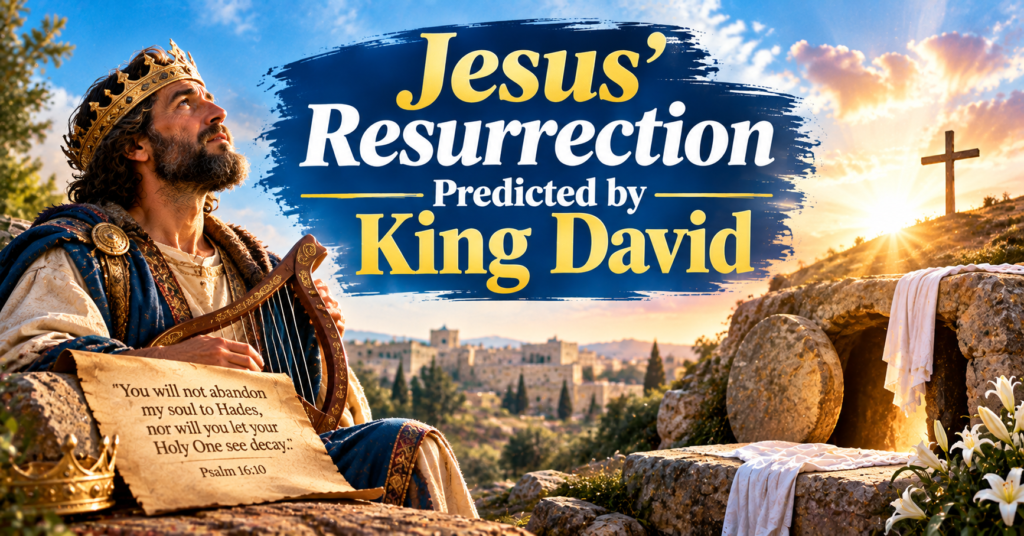
Because David himself was not this holy one who avoided decay, Peter argues that David must have been born with foreknowledge that he would one day suffer this fate while speaking, through scripture, about someone else who would be raised back to life without seeing decay at all: Christ, the one destined for David’s own throne. This, Peter says, is exactly what witnesses among the flesh-and-blood disciples now had direct knowledge of, since Jesus died and was resurrected, truly raised up, God having raised Jesus in a way that fulfilled both David’s hope and David’s prophecy long before it happened. The resurrection of Christ, the death of Jesus, and the path of life that follows now stand at the center of the life, salvation, and faith offered through the Acts of the Messiah; the crucifixion was never the end of the story, and the resurrection itself becomes the proof of redemption, the hope and joy of God’s power made visible, a living resurrection promise and a victory over death that points every listener toward life after death.
Words not used: none from the “Jesus’ Resurrection Predicted by King David” list — all 100 words/terms were included.
I did not use the “Discussion Question #6” word list (Holy Spirit, forty days, crowd, ascended, right hand of God, etc.) since that block wasn’t tied to the “Jesus’ Resurrection Predicted by King David” heading you gave — it looked like content meant for a separate heading or question. Let me know if you’d like that list written up as its own subsection.
The People Accept Peter’s Words
By the time Peter finished tying David’s words to the resurrection and pouring out of the Holy Spirit, something had clearly shifted in his listeners; even those who moments earlier stood as accusers now felt his words land in their heart, and Scripture records the impact as being “cut to the heart,” which is as possible a description of conviction as any brothers could give. They turned to Peter and the other apostles and asked what they should do, and Peter’s answer was simple and direct: repent, and be baptized, every one of them, in the name of the Lord, in the name of Jesus Christ, for the forgiveness of sins, and they would receive the gift of the Holy Spirit, since this promise was for them, for their children, and for all who are far off, everyone the Lord our God would call. Peter didn’t stop there either; he kept on with further testimony, testified, and exhorted them, urging them to save yourselves from this crooked generation, and Luke tells us that those who gladly received his word were baptized, about three thousand souls, 3,000 people, added that very day.
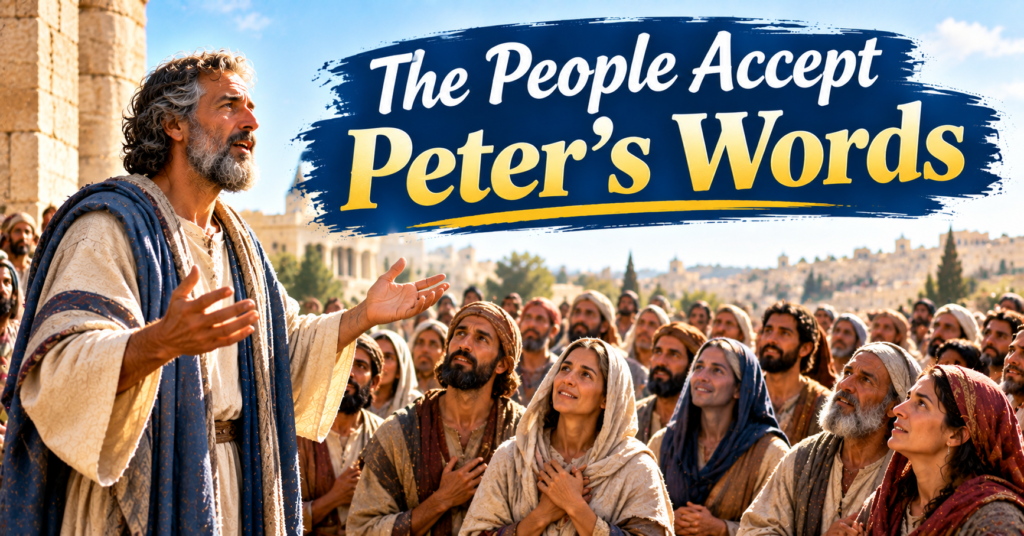
I find this moment remarkable every time I sit with it, because it shows what real evangelism looks like when a message finally reaches someone rather than just passing by them. These new disciples weren’t reacting to clever rhetoric; they were responding to prophet Joel’s prophecy finally making sense, to a path of salvation and faith through repentance that felt personal rather than abstract, and to a calling into believers‘ fellowship rather than a private, individual experience. In my own walk, I’ve noticed that the same Holy Spirit’s power which moved that crowd still shapes how a Christian responds to conviction today, quietly changing the result of an ordinary conversation into a step toward God’s kingdom, one situation and one open heart at a time, much like it did across that whole society gathered in Jerusalem that day.
Words not used: none — every word and term from the Discussion Question #7 list was included.
I did not use the Discussion Question #8 list (pathway, rare event, today, revival, gospel message, discipleship, etc.), since it wasn’t clearly tied to the “The People Accept Peter’s Words” heading you gave — it reads as a separate question set. Let me know if you’d like it written up as its own subsection.