
Every church eventually reaches a point where it has to choose leaders and navigate conflict, and the early church was no different. I remember sitting in on a meeting years ago where our own church was trying to sort out a messy disagreement, and it struck me how little has changed since Bible times — people are still people, and leadership still requires wisdom. That’s exactly why this study of Acts 6 is so worth doing. This chapter shows us a particular church having to deal with problems of a very practical nature, and how they handled it still speaks to us today.
What’s remarkable is that this conflict didn’t hold the church back — if anything, it pushed them forward. Out of this mess came their first deacons, chosen specifically to deal with the needs that had been overlooked. And right after that, we witness significant growth, as more and more people joined the faith. Yet the chapter doesn’t end on an easy note; it also shows the church starting to struggle against jealousy and misguided motives coming from outside the church, a reminder that opposition often follows right on the heels of blessing.
The story in Acts 6:1-6 starts with real friction between Hellenistic Jews and Hebraic Jews inside the growing church community. As the disciples kept increasing in number, a complaint came up: the Hellenists felt their widows were being neglected in the daily distribution of food, while the Hebrews seemed to be cared for just fine. This wasn’t really about genetics or which Jewish community someone came from — some had grown up with traditional Jewish customs in Hebrew-speaking homes, others came from Greek towns shaped by Greek culture, and trying to integrate two different people groups naturally created practical concerns. The apostles didn’t want to feel like second-class citizens were being created inside their own gathering, so they called a meeting. Rather than dropping their preaching of the word of God to serve tables themselves, they asked the brothers to pick seven men of good repute, full of the Spirit and wisdom, to take on this duty, freeing the apostles for prayer and the ministry of the word. Among those chosen was Stephen, a man full of faith and the Holy Spirit, along with Philip, Prochorus, Nicanor, Timon, Parmenas, and Nicolaus, a proselyte from Antioch. The apostles prayed and laid hands on all seven, sending a quiet but powerful message that in Christ Jesus, this kind of beauty in the gospel breaks down old walls — as Jesus taught, believers from every background become united in Christ, and as Galatians 3:25-29 puts it, faith itself becomes our guardian, making us sons of God, baptized into one family where Jew, Greek, slave, free, male, and female are all one in Christ Jesus, all Christ’s, all Abraham’s offspring and heirs of the same promise — not separated by individuals or groups, but brought together through proactive measures meant to rectify exactly this kind of division from the surrounding nations‘ way of doing things.
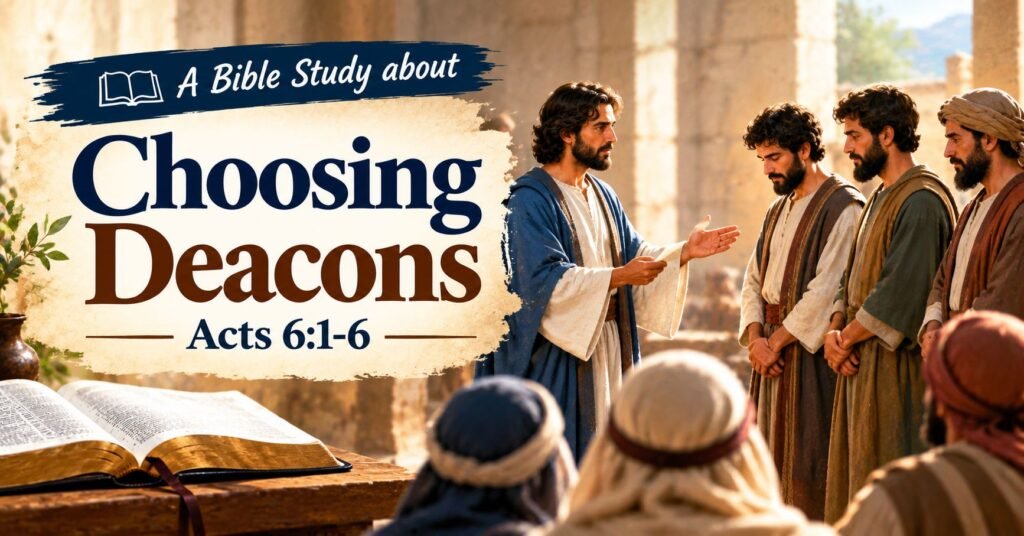
I’ve watched churches handle disagreements like this both well and badly, and what stands out to me every time I return to this chapter is how practical the early church‘s approach was. This wasn’t just abstract teaching for followers to admire — it addressed real-life practical needs head-on. The apostles were equipped for caring about souls, not logistics, so rather than letting people feel overlooked, they stayed teachers at heart while handing the problem of distributing food to others, keeping their primary focus on spreading the gospel message. That solution didn’t divide the group; it strengthened it, showing how leaders and helpers can work side-by-side in any churches without creating real division between elders and deacons, since both carry real responsibilities even as teaching leaders and serving people stay distinct callings. What strikes me most is that these seven men weren’t picked for charisma alone — great wisdom mattered, because you don’t want someone selfish, or worse, a thief, put in charge of resources meant for the vulnerable. Every church today choosing who selects deacons would do well to look at track record and good deeds as real characteristics, not afterthoughts, when weighing who can meet practical needs. A good leader in the church should have prioritized attributes like humility and meaningful assistance toward fellow church members, not popularity. It’s worth noting the Greek names listed in Acts 6:5 — this wasn’t accidental representation, and no one’s past behavior left them disqualified; in fact, even a Gentile convert was chosen. None of these men were perfect, but people who’d made mistakes and repented were still eligible, which says a lot about how deacon voting and representation should work in a group of people today. Setting up a solid elder board and deacon board is necessary, and I hope more churches invest in real training before every election cycle, sticking to biblical qualifications for both elder roles and deacon roles to build a balanced leadership structure that holds up through subsequent election cycles and puts preventative measures in place before conflict, not after.
It’s almost incredible how much impact a simple act of choosing great leaders can have, and Acts 6:7 shows us the results in real time. Right after the seven leaders were set apart, we’re told that the word of God continued to spread, and the number of disciples in Jerusalem multiplied in great numbers. Even a great many priests became obedient to the faith — a detail I find genuinely remarkable, since these were people deeply rooted in the old system, yet the gospel reached them too. Whenever I’ve seen a church finally get its leadership structure right, I’ve noticed the same pattern: people get added, momentum builds, and what looked like a small internal fix ends up producing positive outcomes far beyond what anyone expected.
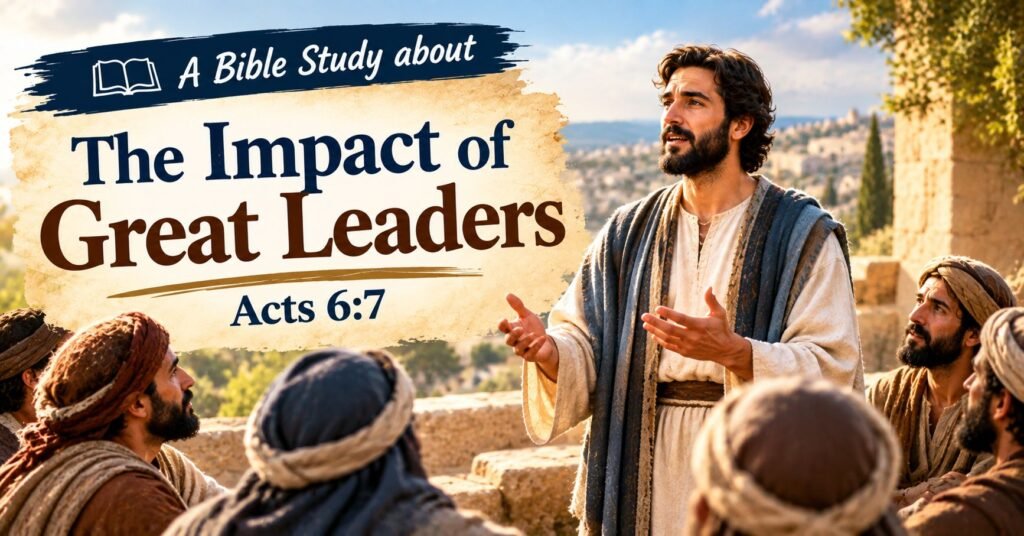
This single verse packs in a lot of positive change for such a short sentence, and it’s a pattern worth paying attention to in any church community. Solving the underlying issues behind a lack of care doesn’t just calm tension — it clears the way for real spiritual growth and stronger ministry impact across the whole faith community. I’ve come to believe that church growth and discipleship aren’t separate tracks; when leaders deal honestly with challenges inside their own ministries, obedience to the gospel tends to follow naturally, and preaching gains a kind of credibility it didn’t have before. The increase and multiplication described here weren’t accidental — they were the fruit of real transformation, starting small within the church and rippling outward until it touched people who once seemed entirely out of reach.
Stephen, full of grace and power, began doing wonders and signs among the people, and this is where things take a darker turn. Members of a certain synagogue — made up of Freedmen, Cyrenians, Alexandrians, and others from Cilicia and Asia — rose up in dispute with him, but they couldn’t withstand the wisdom and Spirit with which he was speaking. Rather than admit they were beaten in honest argument, they secretly instigated men to claim they’d heard Stephen speak blasphemous words against Moses and God. I’ve seen smaller versions of this play out in modern churches too — when someone can’t win on the merits, criticism sometimes turns underhanded fast. They stirred up the people, the elders, and the scribes, and seized Stephen, dragging him before the council with false witnesses lined up to claim he never stopped speaking against the holy place and the law, insisting they’d heard him say that Jesus of Nazareth would destroy this place and change the customs Moses handed down. Yet even in that moment, everyone staring at him saw his face like the face of an angel — hardly the look of a guilty man.
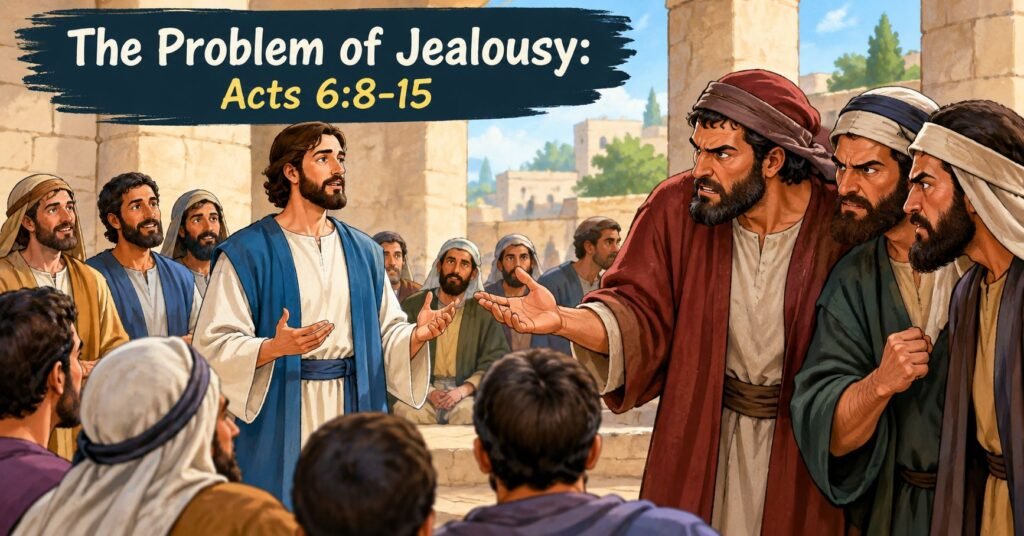
What gets me every time I read this section is how jealousy and anger, not pure motives, drove the whole campaign to silence him. These weren’t honest naysayers with God’s words at heart; they had thoroughly misguided motives, the same kind of hostility Paul himself would later face for preaching the same gospel. There’s a right way to fight for what’s true, and this wasn’t it — leveling a serious charge like blasphemy through false witnesses rather than an honest defense of contrary-to-God ideas is nothing short of a tragedy. It should make any church community pause and discern whether God’s teachings truly reign supreme in how they handle disagreements, or whether contentious and potentially blasphemous topics get used as weapons instead. A speaker’s words can sound convincing, even when they’re incorrect, so good leaders need to stay respectful, letting the Holy Spirit’s wisdom — not their own ideas or opinion — shape how they respond when their convictions are challenged. Real discernment means checking whether our supporting arguments hold up, being willing to walk away from an original stance if it’s wrong, and staying open to a genuine change of perspective when the influence of truth demands it. In the end, Jesus and God don’t need our efforts to win through deception — that’s always a losing battle — and Spirit filled believers are called to let their words and actions align and reflect what’s almost right into what’s fully right, letting real wisdom integrate into their lives rather than fight for God in the wrong way.