
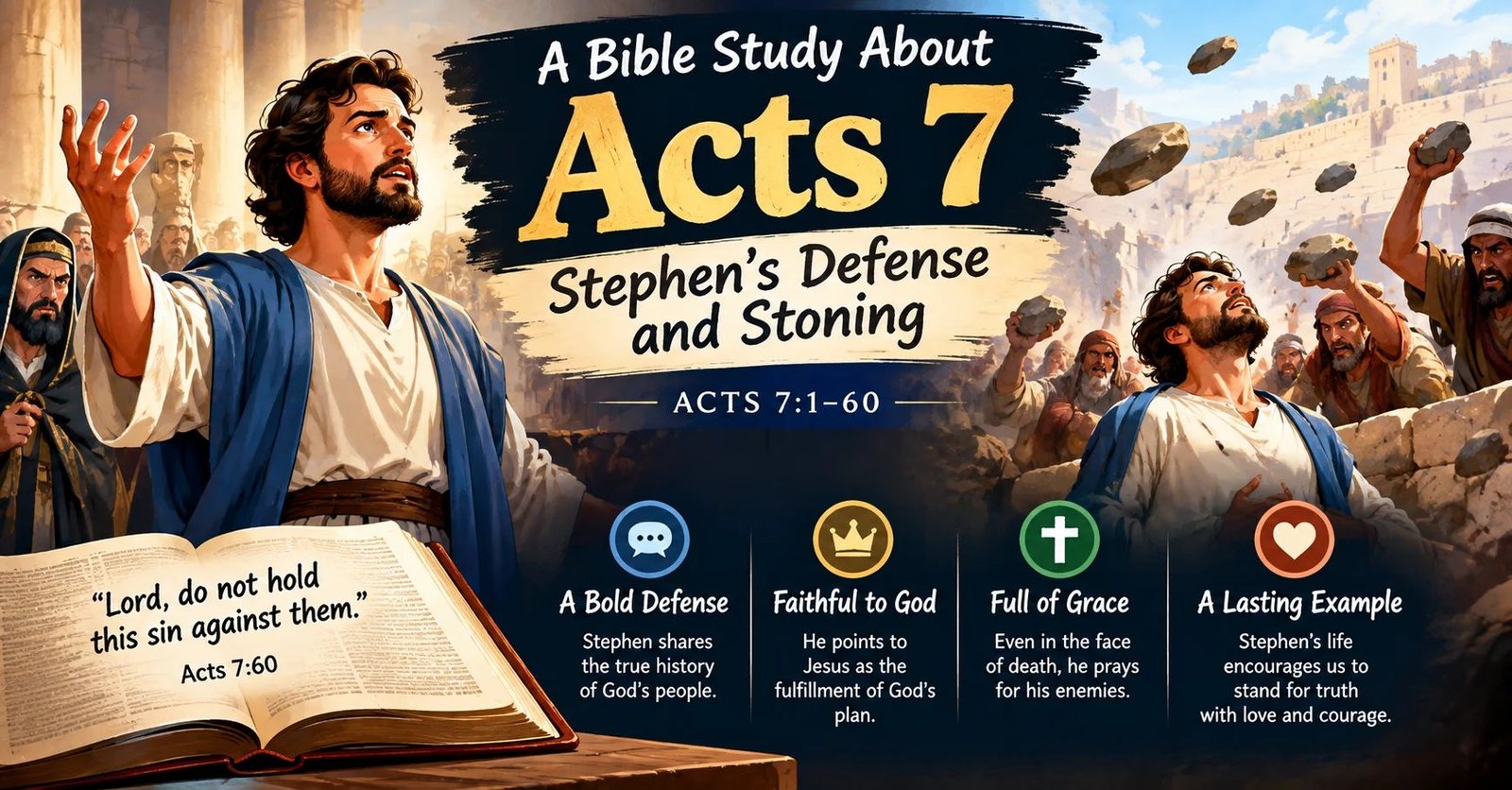
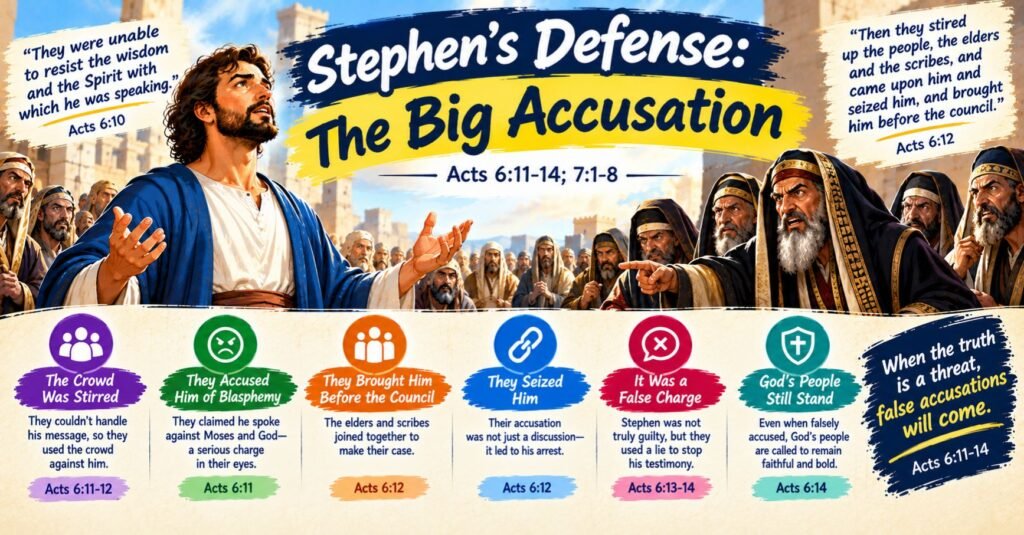
Every time I open the book of Acts, I find myself drawn back into the story of Stephen, and this week is no different as we pick up right where we left off. If you believe in following along verse by verse, you’ll remember that Stephen was elected to the position of a modern-day deacon, a role he shined in almost immediately. But great things rarely go unnoticed, and whether it came from fear or plain jealousy, certain Jewish people who refused to believe the claims of Jesus stirred up the people against him. They fabricated false evidence, gathered elders and scribes, and eventually brought Stephen before the Jewish council. There, false witnesses delivered their accusations, insisting that Stephen never stopped speaking blasphemous words against the holy place and the law, and that he claimed Jesus of Nazareth would destroy the temple and change the customs Moses handed down to them, as recorded in Acts 6:12-14 (WEB).
What strikes me most, having spent years in personal study of this passage, is how the council reacted once Stephen was seized and standing before them. It’s an unfortunate way for Acts to unfold, watching witnesses twist truth for the sake of protecting tradition rather than examining it honestly. I’ve seen this same pattern play out in modern church settings too good, faithful people shined in their calling, only to be met with suspicion instead of support. That tension is exactly where next week’s study picks up, as Stephen finally gets the chance to answer the Jewish council face to face.
When I first read Stephen‘s defense before the high priest, what struck me was how he built common ground between Jews and Christians right from the start. He addresses the council as “brothers and fathers,” reminding everyone that the God of glory appeared to their father Abraham while he was still living in Mesopotamia, long before he ever set foot in Haran. Abraham left his land and his relatives, walked away from the Chaldaeans, and trusted God even though he owned no inheritance there, not even a possession the size of a footstep. God promised the land to him and his offspring, even though Abraham had no child yet. That promise came wrapped in a covenant, sealed through circumcision, and it carried forward through Isaac, then Jacob, and finally the twelve patriarchs who became the roots of the Jewish religion itself. I find it moving that Stephen doesn’t shy away from honoring these forefathers he’s speaking their language before he challenges their thinking.
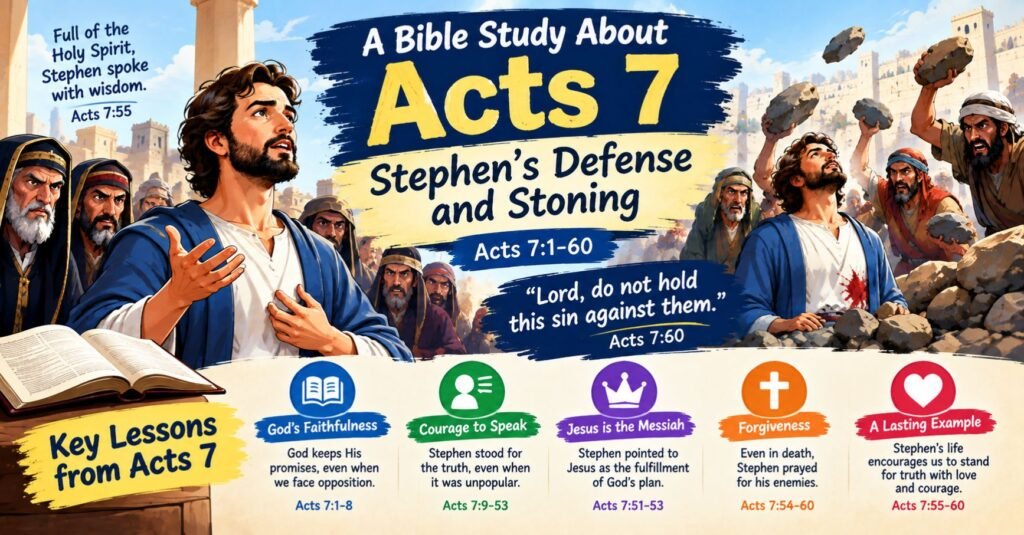
What Stephen is really doing here, in my view, is highlighting Abraham’s nomadic lifestyle and using that nomadic history to make a bigger point. Abraham moved from Iraq to Turkey before ever settling in Israel and his descendants later found themselves enslaved in Egypt before God brought them back. That return wasn’t the end of the story either; it was really about learning to worship God wherever they stood. This matters because the Jewish people often assumed their faith needed one set location to survive, but Stephen is quietly pushing back on that historical norm. He’s laying groundwork for the gospel message to spread far beyond the boundaries of one nation, showing that God’s people were never meant to be tied to a single location a truth that later opened the door for Gentile Christians to belong just as fully.
I’ve always found the story of Joseph one of the most comforting in Scripture, because it shows how God works even when things look completely broken. Stephen reminds his listeners of the patriarchs, and how jealousy drove Joseph‘s own brothers his relatives, his own flesh and blood to sell him into Egypt. Yet God was with him through the afflictions he faced, giving him favor and wisdom before Pharaoh, the king of Egypt, who made him ruler and governor over his house and all the land. When a severe famine struck Canaan, causing great affliction and leaving the fathers without food, Jacob heard there was grain in Egypt and sent his sons there. On their second visit, Joseph revealed himself to his own brothers, and he summoned his father Jacob and all his relatives seventy-five souls in total to come and be delivered from the famine. It’s a rescue story wrapped in family trauma, yet God never let go of his people.
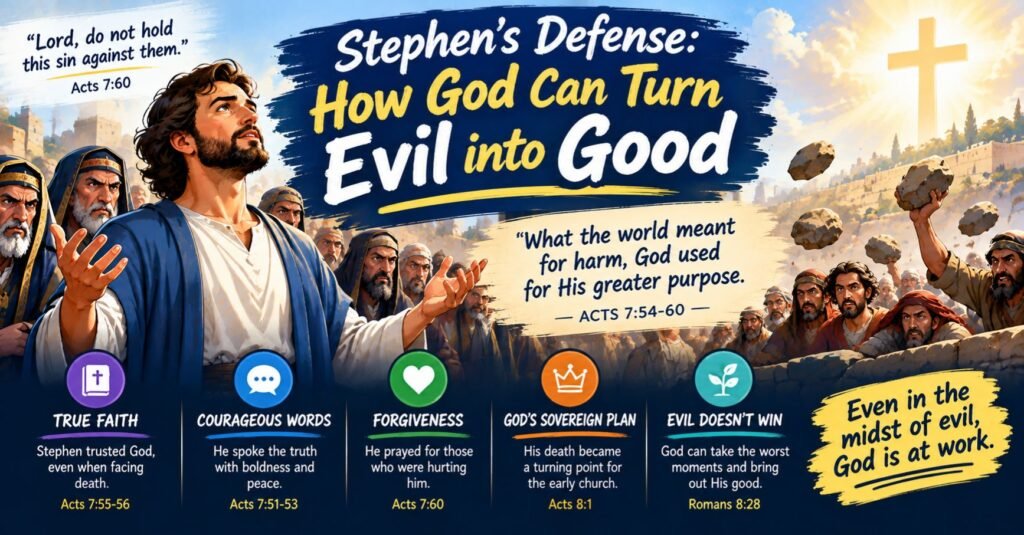
What amazes me most, though, is what happens after. Jacob died in Egypt, and his body was brought back to Shechem, laid in the tomb that Abraham had bought for a price in silver from the children of Hamor a small but powerful sign that Israel never fully belonged to Egypt, even during Egyptian slavery. This whole account shows a nomadic God who meets us wherever we are, whether in a foreign palace or a famine struck homeland, among Israelites or humans of any race. Stephen’s point is simple but profound: own brothers meant to foil Joseph’s life, but their intended evil couldn’t overpower the will of God, who turned it to good and used it to help and preserve his people. That’s the pattern I keep coming back to in my own life evil doesn’t get the final word when God is writing the story.
I love this part of Stephen’s speech because it shows a pattern I’ve noticed in my own life too blessing often stirs up trouble. Stephen explains that as time passed, God kept the promise he made to Abraham, and his people, living in Egypt, grew and multiplied until the Egyptians could no longer ignore them. God had prospered Joseph and his race, but once a different king rose to power in Egypt who didn’t remember Joseph, everything changed. This new ruler grew fearful of how fast the Jewish families were multiplying, worried about their military might and their steady progression, so out of envy and jealousy he mistreated the fathers and forced them to abandon their newborn babies so they wouldn’t stay alive. It’s heartbreaking, honestly, but it sets the stage for Moses, who was born exceedingly handsome and nourished in his father’s house for three months before being placed with Pharaoh’s daughter, who reared him as her own son.
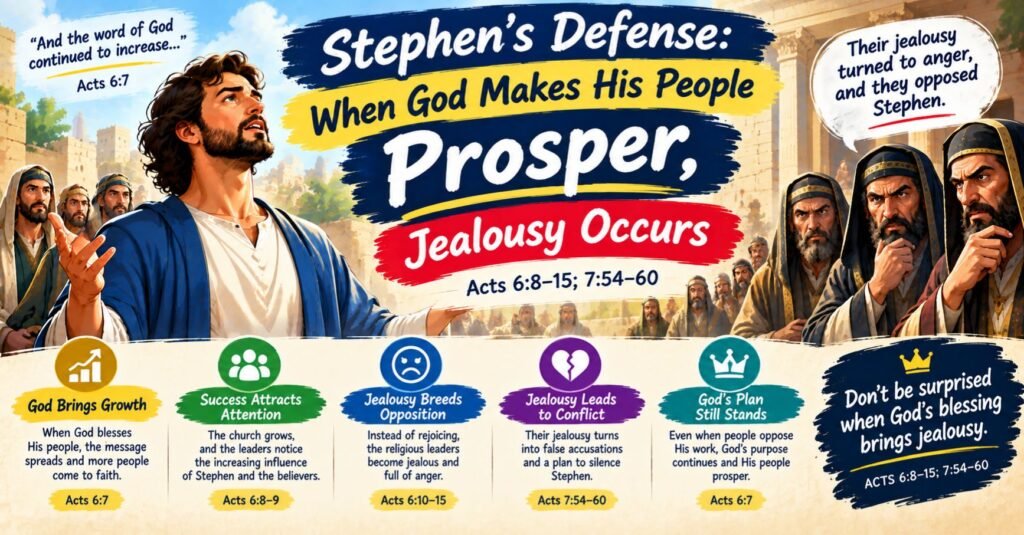
What strikes me here is how God never seems to forget his people, even when things look impossible the midwives who chose to save the children instead of following orders are a small but powerful example of that. Moses was instructed in Egyptian wisdom and became mighty in words and works, being raised right inside Pharaoh’s household as a son even though the Egyptians had once tried to destroy him. I see real similarities between this story and Joseph’s both were intended to die, both ended up in a Pharaoh’s daughter‘s or Egyptians‘ care, and both were part of God’s plans to raise up someone to save his people. Fear and jealous hearts among the Egyptians and even later among Jewish leaders couldn’t stop God from working evil into good, proving again that when his people face a difficult situation, he always provided rescue and a way out, offering rescue exactly when it was needed most.
This part of Stephen‘s speech always hits close to home for me, because it shows how easy it is to miss God‘s rescue plan even when it’s unfolding right in front of us. When Moses was forty years old, something stirred in his heart for his brothers, the children of Israel, and he went to see how his own people were being treated. He saw an Israelite suffer wrong at the hands of an Egyptian, and defended him, avenged the one being oppressed by striking down the offender. Moses clearly understood that the hand of God was going to use him to bring deliverance to the Israelites, but the people themselves didn’t see it that way. The very day following, Moses came across two fellow Israelites who fought with each other, and he tried to bring peace, asking why they would wrong one another as neighbor to neighbor. But instead of gratitude, the man asked him who made him ruler and judge over them, and even threatened to kill him the way he had killed the Egyptian the day before.
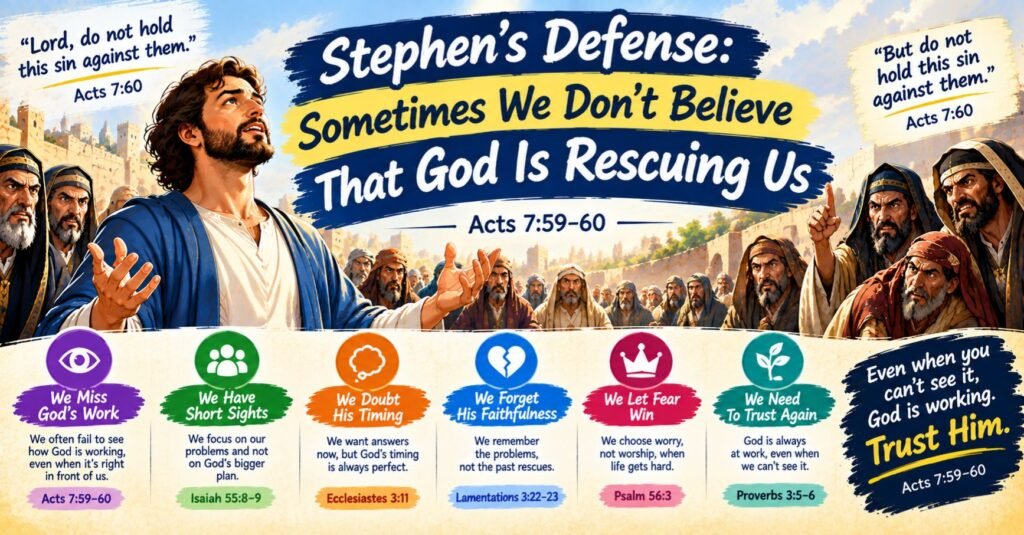
That rejection is what forced Moses to flee he fled and became a stranger in the land of Midian, where he became a father to two sons, far from Pharaoh’s household and everything he’d known. What strikes me most, and what I think Stephen wanted the Jewish leaders listening to see, is how this whole scene mirrors their own roots: an inability to recognize rescue when it’s standing right there. It was painful for Moses’ soul to be rejected by the very Israelites he tried to help, mistreating and refusing the one sent for their salvation. This wasn’t a random tragedy — it foreshadowed how the promised Messiah himself would later be offered to his own people, only to be refused, because so many still couldn’t accept that evil and a difficult situation were exactly where God’s rescue plan was quietly at work.
Every time I sit with this chapter, it hits me that Stephen isn’t just reciting history he’s preaching good news wrapped inside names his listeners already knew by heart. He opens with the fathers Abraham, Isaac, and Jacob then moves into the wilderness, where a flame of fire burning inside a bush caught Moses’ sight. The Lord’s voice called out, and Moses trembled, told to slip off his sandals because he was standing on holy ground. That one moment still overrides any doubt I’ve ever had about whether God actually notices the affliction of His people. Back in Egypt, the groaning of the children of Israel rose all the way to heaven, so God chose to send a deliverer an angel met Moses at Mount Sinai, the angel of the Lord Himself, to deliver His plan and appoint Moses as ruler and deliverer, no résumé required. Across forty years, wonders and signs followed him the Red Sea split open, the people were led through the wilderness like a living prophet walking among his brothers, part of a divine assembly carrying living revelations meant to be obedient to. And still here’s the gut-punch Moses was rejected. Their hearts wandered instead, and Aaron, worn down by the crowd, helped shape other gods: a golden calf built for sacrifice, an idol they rejoiced over, bowing to the works of their own hands.
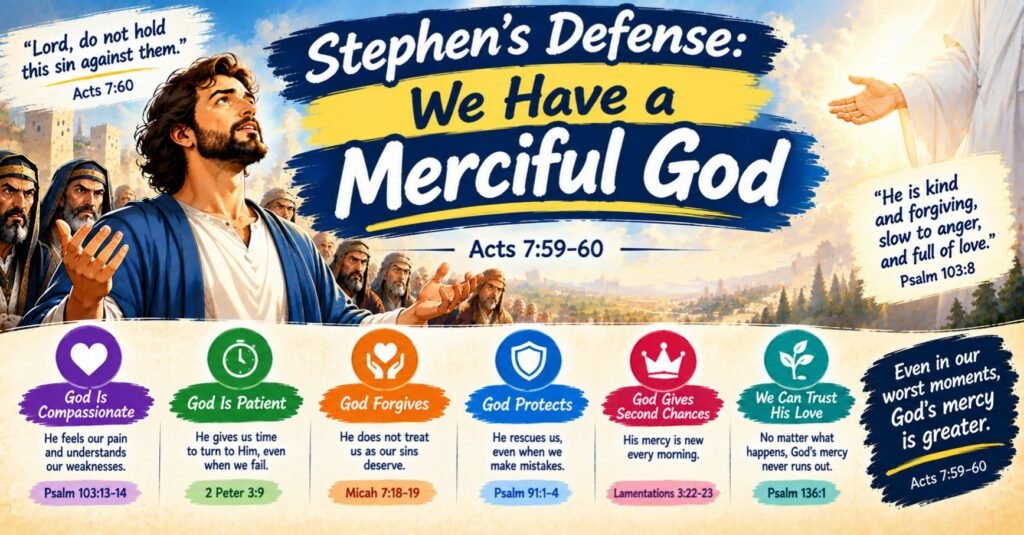
That rejection didn’t begin or end with a calf; it’s the thread running straight to Stephen’s real argument. God handed them over to worship the army of the sky, just as it’s written in the book of the prophets slain animals and sacrifices offered up, yet never truly for the house of Israel’s God, but for Moloch, a star, and the carved figures of Rephan, idols they dragged all the way into Babylon. From there Stephen connects the tabernacle, the land of Egypt, and the whole sweeping story into one hard truth: the Jewish people had a habit of rejecting the very instrument sent to save them, and by rejecting Jesus, they’d effectively rejected Moses all over again. And yet, honestly, that’s where I find peace, because this entire chapter is really about a merciful God whose salvation and rescue plan never hinged on anyone getting it perfectly right He rescued a groaning, flawed people back then, and He’s rescued me on plenty of days I didn’t deserve it either. So here’s my Discussion Question for you: when you feel rejected or not good enough, can you still recognize a merciful God chasing after you with a rescue plan already fulfilled through Jesus, using ordinary hands and hearts like yours as His instrument?
Stephen keeps his testimony moving forward, and this next stretch of his defense before the people always strikes me as the real turning point the part where he pivots from Israel’s failures to their misplaced idea of where God actually lives. Out in the wilderness, Moses was shown a pattern, and from that pattern he built the tabernacle of the testimony, a portable dwelling the fathers carried with them. Later, under Joshua, they entered the land, drove out the nations before the face of our fathers, and took possession of it a possession that lasted right up until the days of David. David found favor in the sight of God, and he asked whether he might find a habitation for the God of Jacob, but it was Solomon who actually built Him a house a temple. Here’s the twist Stephen drops like a hammer: the Most High doesn’t dwell in temples made with hands. As the prophet said, “Heaven is my throne, and earth is my footstool; what house will you build Me, says the Lord, or what is the place of my rest? Has not my hand made all these things?” That line about God’s hand and creation has stuck with me for years — it reframes every building, every sacred place, every attempt to box in the divine presence into something manageable.
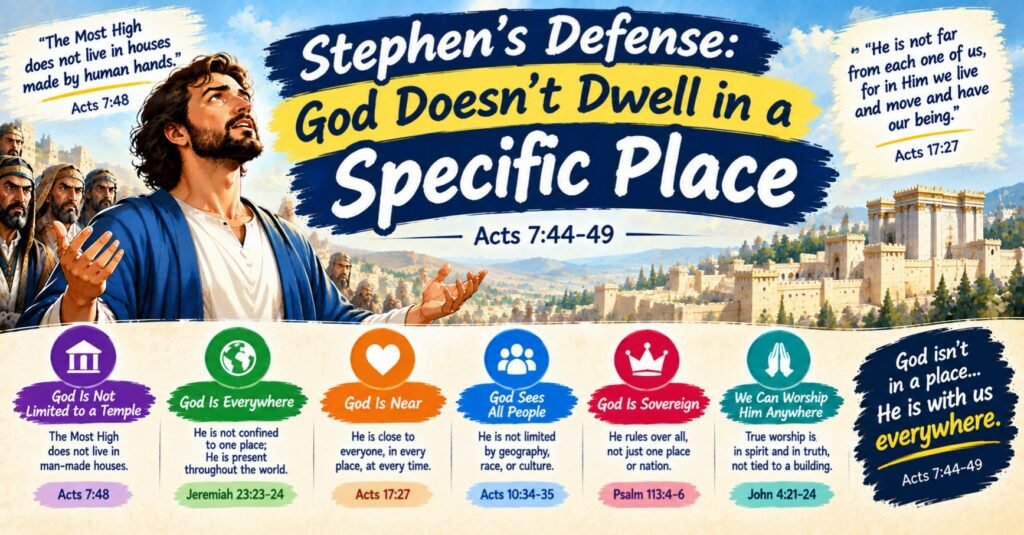
That’s the piece I keep coming back to in my own spiritual life God was never asking for a permanent home made of stone; He was asking for a true dwelling place inside people. Think about how Christians today still gather at church, offer pre-meal prayers before a meal, or bow their heads in thanks and gratitude none of that is wrong, but it’s not the point either. The real benefit of worshiping and thanking God isn’t the church worship service itself; it’s the relationship it grows, the fellowship, the communion, the quiet obedience and devotion that shape our lives. God’s desire has always been a real relationship, a life with God that touches all aspects of life — not just Sunday mornings but daily life, ordinary areas of life, the spiritual growth that happens when we stop trying to isolate or constrict God to one sacred place and instead stay open to God everywhere. I’ve caught myself doing the opposite treating prayer and worship like a scheduled appointment, keeping closed corners of my own life off-limits, when what God’s people are actually invited into is a God-centered life, a daily walk with God where His presence isn’t boxed into a building but welcomed into human beings, into human desire, into every part we’d rather keep shut. Faithfulness looks less like building places and more like staying spiritually open, letting the same hand that shaped creation stay near in the prayer life and worship life we carry all week long.
By this point in his response, Stephen stops explaining history and turns the whole thing into a direct confrontation — and honestly, this is the moment that still gives me chills every time I read it. He looks straight at the religious leaders standing over him and calls them stiff-necked and uncircumcised in heart and ears, meaning their stubbornness wasn’t about tradition, it was about a refusal to truly listen to God. He tells them plainly: you always resist the Holy Spirit, just like your fathers did. That’s the accusation not a small jab, but a full conviction, tracing a cycle all the way back through the Old Testament. Which prophets, he asks, did your forefathers not persecute? They killed the ones who foretold the coming of the Righteous One, and now his listeners had become the betrayers and murderers of that same promised Messiah. It’s a hard pattern to sit with — Israel didn’t just mess up once; sin and resisting God became almost unending, generation after generation, without real repentance.
What gets me every time I teach this passage is how Stephen doesn’t let the current leadership off the hook by blaming ancient history he confronts them directly, saying they received the law as it was ordained by angels, yet still weren’t keeping the law themselves. That’s the real fight here: it was never about misinterpretation of scripture or getting God’s ways slightly wrong it was flat-out disobedience, a spiritual resistance dressed up as religious authority. I’ve sat across from people in my own life who knew exactly what obedience and faith required of them and still chose refusing over bowing to God, and Stephen’s words hit the same nerve now as they did then among the Jewish crowd. This wasn’t someone twisting a minor detail; this was spiritual leaders, meant to guide Israel toward the Messiah, instead standing in persecution and betrayal against the very truth their own scripture had promised.
When the religious leaders heard Stephen’s words, something in them snapped Scripture says they were cut to the heart, filled with extreme anger, an unwillingness to bend even an inch toward the truth he’d just laid out. They gnashed at him with their teeth, and honestly, I’ve always found that detail chilling it’s not a metaphor, it’s raw fury with no room left for reason. But Stephen, steadfastly full of the Holy Spirit, looked up into heaven and saw the glory of God, with Jesus standing at the right hand of God. He said it out loud, in a loud voice: the heavens opened, and there stood the Son of Man. That was too much for the crowd they stopped their ears, that plugging of their ears a physical refusal to hear one more word, and with one accord they rushed at him. False witnesses dropped their garments at the feet of a young man named Saul, and the whole mob dragged Stephen out of the city and stoned him to death, as recorded in Acts 7:54-60.
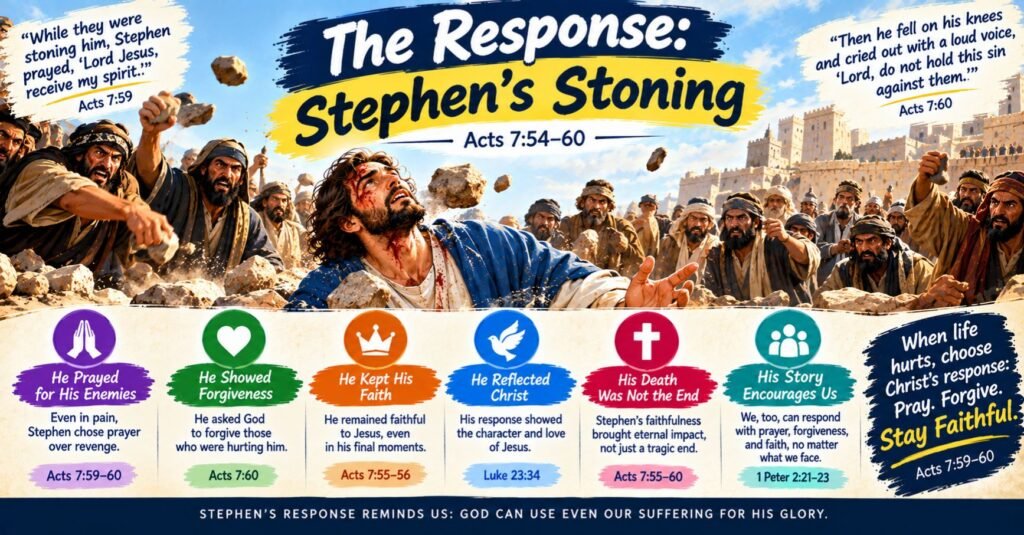
What gets me, every single time I sit with this chapter, isn’t just the tragedy of watching a good man die it’s what he did even in death. Stephen kneeled down, cried out with a loud voice, and asked the Lord Jesus to receive my spirit, then prayed that God wouldn’t hold this sin against them, before he fell asleep. That’s Stephen’s example, and it’s the whole reason I keep coming back to this passage whenever I’m struggling to forgive someone who’s genuinely wronged me. Finding Solace and Strength in Forgiveness isn’t just a nice phrase it’s a real lesson from Stephen’s faith, because even facing a death that serious, he chose forgiveness over a grudge. I’ve caught myself holding onto resentment far longer than I should, and what helps me most is remembering that result: peace, not bitterness. So here’s my Discussion Question for you when someone sins against you in a way that feels unforgivable, can you turn to Jesus and allow forgiveness to enter your heart the way Stephen did, following his example even when your own prayer feels hard to say? These aren’t just ancient lessons; they’re deeply relevant to own life and the power of forgiveness we’re each still learning to walk out, one good response at a time.